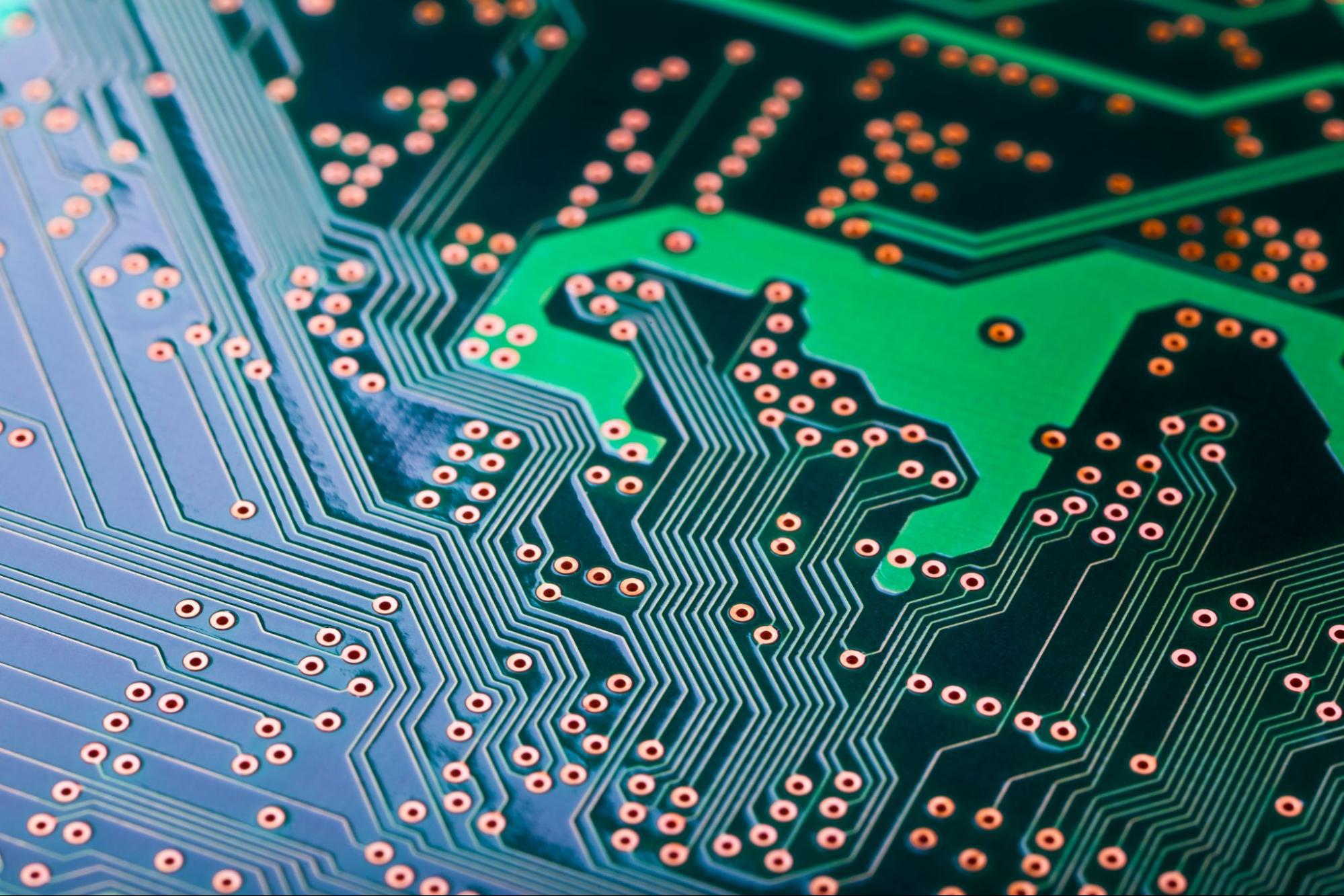
Learn the complete process of printed circuit board design from schematic creation to PCB layout and fabrication. This course focuses on industry tools, component placement, routing techniques, and preparing manufacturing-ready PCB designs.
The PCB Design & Fabrication course provides comprehensive training on designing and manufacturing printed circuit boards (PCBs) used in modern electronic devices. PCBs are the backbone of electronic hardware systems and are widely used in consumer electronics, industrial equipment, automotive electronics, telecommunications, medical devices, and IoT systems.
This course covers the complete PCB development cycle—from schematic design and component selection to layout design, signal routing, fabrication processes, and testing. Participants will gain practical knowledge of industry-standard PCB design tools and learn how to create professional multi-layer circuit boards suitable for real-world electronic products.
By the end of the course, learners will be able to design, fabricate, and test functional PCBs for various embedded and electronic applications.
This module introduces the basic principles of printed circuit boards and their role in electronic systems.
Topics Covered
This module focuses on creating circuit diagrams and preparing schematics for PCB design.
Topics Covered
This module teaches the process of converting schematics into physical PCB layouts.
Topics Covered
This module explains how designed PCBs are manufactured in fabrication facilities.
Topics Covered
This module covers the assembly of electronic components on PCBs and testing techniques.
Topics Covered
This module explores advanced PCB design techniques used in complex electronic systems.
Topics Covered
This module allows participants to apply their learning through a real-world PCB design project.
Topics Covered
After completing this course, participants will be able to:
Everything you need to know about this course
A Printed Circuit Board (PCB) is a board that mechanically supports and electrically connects electronic components using conductive copper traces.
This course is suitable for electronics engineering students, embedded developers, hardware engineers, and anyone interested in electronic product design.
Basic knowledge of electronics is helpful, but beginners can also follow the course with proper guidance.
Participants will learn how to design schematics, create PCB layouts, understand fabrication processes, and assemble electronic circuits.
PCB designers are needed in industries such as:
Yes. Participants will work on real PCB design projects and develop a functional circuit board.
The course typically takes 6 weeks depending on the learning schedule.
Yes. Participants who successfully complete the training and project will receive a PCB Design & Fabrication Certification.
What our students say about this course