Cloud engineers and digital marketers stepping into AI need to grasp how Azure's AI and Machine Learning services transform raw data into actionable intelligence, powering everything from predictive analytics in SEO campaigns to automated security threat detection in cloud infrastructures. These services go beyond buzzwords, offering scalable, enterprise-grade tools that integrate seamlessly with Azure's core ecosystem, enabling professionals in India or the UAE to build smarter applications without starting from scratch. In 2026, with AI driving 40% of cloud workloads, understanding these services means staying ahead in roles blending cloud security, content personalization, and e-commerce optimization, like online flower sales.
This deep dive unpacks each service's role, real-world use cases, and integration tips, drawing from Microsoft's evolving platform to help you deploy AI ethically and efficiently. Whether you're auditing cloud setups at Publicis Media or crafting SEO-driven content strategies, Azure AI equips you with no-code to pro-code options that amplify productivity while ensuring compliance with global data regulations.
Core Foundation: Azure Machine Learning (Azure ML)
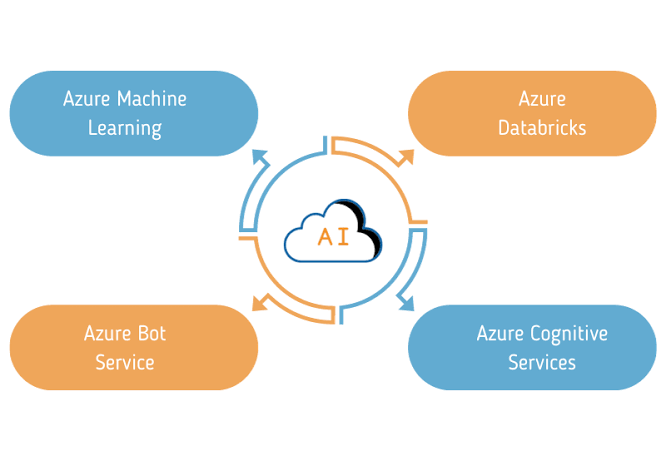
At the heart of Azure's ML offerings sits Azure Machine Learning, a fully managed, end-to-end platform that simplifies the entire ML lifecycle from data ingestion to production deployment and monitoring. Imagine ingesting petabytes of customer behavior data for personalized marketing campaigns; Azure ML handles data prep with automated cleaning, feature engineering via designer tools, and model training on scalable GPU clusters supporting frameworks like PyTorch, TensorFlow, or scikit-learn. Its MLOps features automate pipelines for CI/CD, versioning, and drift detection, ensuring models stay accurate as real-world data shifts, crucial for dynamic environments like social media trend analysis or cloud security anomaly spotting.
For cloud engineers, Azure Machine Learning Designer offers a low-code drag-and-drop interface to prototype models quickly, while SDKs enable custom Python scripts for advanced experimentation. Distributed training across multi-node clusters slashes training times from days to hours, and built-in responsible AI tools like model explainability and fairness checks help prevent biases in applications such as targeted ads or fraud detection. Pros love how it integrates with Azure Databricks for big data processing and Git for reproducible workflows, making it a staple for teams scaling AI without infrastructure headaches.
Pre-Built Intelligence: Azure Cognitive Services
Azure Cognitive Services deliver ready-to-use AI APIs that add human-like perception to apps without needing data science expertise, covering vision, speech, language, and decision-making capabilities. For instance, Computer Vision analyzes images for object detection or optical character recognition, perfect for automating content moderation in Instagram flower bouquet posts or extracting insights from user-uploaded photos in e-commerce. Speech Services enable real-time translation and transcription, ideal for multilingual SEO tools or virtual assistants in customer support.
Language APIs power sentiment analysis, key phrase extraction, and entity recognition, helping marketers gauge audience reactions to campaigns or engineers parse logs for security threats. Anomaly Detector spots irregularities in time-series data like website traffic spikes, while Content Moderator filters harmful content automatically. These RESTful APIs scale effortlessly, charge per transaction, and comply with GDPR. Deploy them via simple SDKs in languages like Python or JavaScript to supercharge WordPress sites or Google Ads integrations without heavy lifting.
Generative Powerhouse: Azure OpenAI Service
Azure OpenAI Service brings cutting-edge large language models like GPT-4 and beyond to your Azure tenancy, enabling generative AI for chatbots, content creation, and code assistance with enterprise safeguards. Cloud engineers use it to generate ARM templates for infrastructure-as-code or to summarize vast logs for faster troubleshooting. At the same time, marketers craft SEO-optimized blog outlines or personalized email sequences based on user data. Fine-tuning options let you adapt models to domain-specific needs, such as predicting flower demand trends in UAE markets using historical sales data.
Provisioning is straightforward via the Azure portal: select models, set rate limits, and integrate with Azure AI Search for retrieval-augmented generation (RAG) that grounds responses in your private data. Built-in content filters mitigate hallucinations and toxicity, ensuring safe deployment in production. Think AI-powered chat agents for social media engagement that evolve with user interactions.
Advanced Analytics and Specialized Tools
Azure AI extends to niche powerhouses like Azure AI Bot Service for conversational AI, connecting bots to channels like WhatsApp or Teams for seamless customer interactions in e-commerce or support tickets. Azure AI Video Indexer extracts insights from multimedia, transcribing videos and detecting emotions for sports media analytics or content creators. For data-heavy workflows, Azure Databricks fuses Spark-based analytics with MLflow for collaborative model building, bridging your Excel data viz skills to lakehouse architectures.
Azure AI Search enhances RAG pipelines by indexing enterprise data for semantic search, powering intelligent knowledge bases. Metrics Advisor monitors KPIs proactively, alerting on anomalies in cloud costs or campaign performance, vital for zero-trust security audits or ROI tracking in digital marketing.
Integration and Best Practices for Cloud Engineers
Seamlessly weave these services into Azure ecosystems using Event Grid for real-time triggers, Azure Functions for serverless orchestration, and Kubernetes for hybrid deployments. Start with a free tier sandbox: ingest data via Synapse Analytics, train in Azure ML, enrich with Cognitive APIs, and deploy via ACI or AKS. Security pros appreciate Azure AD integration, private endpoints, and encryption at rest/transit, aligning with cloud security best practices.
For optimal results, adopt a phased approach: prototype with low-code tools, scale with MLOps pipelines, and monitor via Application Insights. Leverage Microsoft Learn paths for hands-on labs, and join Azure AI communities on LinkedIn for India-specific tips. This stack not only boosts efficiency but future-proofs your expertise amid 2026's AI explosion.
Real-World Impact and Getting Started
Mastering Azure AI and ML services unlocks roles like AI Engineer or ML Ops Specialist, blending your SEO analytics with predictive insights for 25-40% career growth. Deploy a simple sentiment analyzer for social media today using Cognitive Services, then evolve to custom models in Azure ML. With Azure's 90%+ uptime and global regions, your innovations reach users in Rāmpur to Dubai reliably, and start building the intelligent cloud edge now.