Navigating Microsoft Azure pricing can feel like decoding a financial puzzle, but for cloud engineers managing infrastructures in dynamic environments like digital marketing agencies or e-commerce setups, understanding it unlocks massive savings and efficiency. Azure's flexible models, pay-as-you-go, reservations, and spot instances charge based on usage across 200+ services, influenced by region, redundancy, and commitment length, helping pros in India or the UAE optimize spends on VMs for SEO analytics or storage for flower sales data. In 2026, with cloud costs averaging 30% of IT budgets, this breakdown equips you to forecast accurately, avoid surprises, and leverage tools like the Azure Pricing Calculator for precise estimates.
This explanation demystifies core components, pricing tiers, and cost structures without overwhelming jargon, using real-world scenarios that mirror cloud security audits and content creation workflows. Whether scaling Publicis Media campaigns or securing hybrid environments, understanding these concepts helps ensure every rupee or dirham delivers maximum value.
Core Pricing Models: Flexibility at Your Fingertips
Azure starts with Pay-As-You-Go (PAYG), billing per second for most services with no upfront cost for testing AI models or sporadic workloads like seasonal Instagram promotions. Virtual machines, for example, cost around $0.02-$0.20 per hour for basic Linux instances in East US, scaling with CPU cores, RAM, and OS; a B2ats v2 Windows VM runs about $0.0198/hour, totaling $71 monthly for five units over 30 days. Reservations lock 1- or 3-year commitments for up to 72% discounts on steady compute needs, like always-on databases for customer analytics. At the same time, Spot VMs offer 90% off for interruptible tasks such as batch ML training.
Azure Hybrid Benefit slashes costs further by applying existing Windows/SQL licenses, saving 40% on VMs, perfect for migrations from on-premises to Azure for Gurugram-based teams. Dev/Test pricing cuts rates for non-production environments, and Savings Plans provide flexible compute commitments across services. Free tiers include 750 hours of B1S VMs monthly plus 5GB storage, letting you prototype cloud security tools risk-free.
Compute Services: Where Most Budgets Live
Compute dominates Azure bills, with Virtual Machines priced by series like Av2 (general-purpose, $0.02/hour entry) to E-series (memory-optimized for analytics). A mid-tier D2s v5 with 2 vCPUs and 8GB RAM hits $0.10-$0.15/hour; running 20 units 24/7 racks up $2,945 monthly before discounts. Azure Kubernetes Service (AKS) adds $0.10/hour per cluster, so eight clusters cost $576 monthlyoptimize by rightsizing via Azure Advisor recommendations.
Azure Functions, serverless darlings for event-driven tasks like real-time SEO alerts, charge $0.20-$0.40 per million executions plus GB-seconds; 4 million daily runs total $24 monthly. App Service follows similar consumption models, freeing you from server management while scaling e-commerce backends seamlessly.
Storage Breakdown: Tiered for Every Need
Blob Storage offers Hot ($0.018/GB for frequent access), Cool ($0.01/GB for infrequent), and Archive ($0.00099/GB for cold data) tiers with LRS redundancy at baseline; 200GB Hot costs $3.60 monthly, doubling with ZRS for higher durability. Files and Disks add IOPS/throughput fees, Premium SSDs at $0.12/GB provisioned, suiting high-performance databases for ad campaign tracking.
Managed Disks scale from 4GB ($2.40/month) to ultra disks for mission-critical apps, while Azure Files ($0.06/GB standard) powers shared drives for team collaborations in Rāmpur offices.
Database and Networking Costs Demystified
Azure SQL Database uses vCore ($0.038/hour standard) or DTU models, Basic at $4.99/month for dev, Premium $300+ for production, handling transaction spikes in marketing dashboards. Cosmos DB bills per RU/s throughput; 400 RU/s costs $5.85 monthly, scaling to $58 for 5000 RU/s in global e-commerce apps.
Networking includes data transfer (free inbound, $0.087/GB outbound beyond 100GB), Load Balancers ($0.025/hour standard), and VPN Gateways ($0.04/hour basic). A global VNet setup with ExpressRoute adds $200-500 monthly but ensures low-latency UAE-India connectivity.
AI, ML, and Advanced Services Pricing
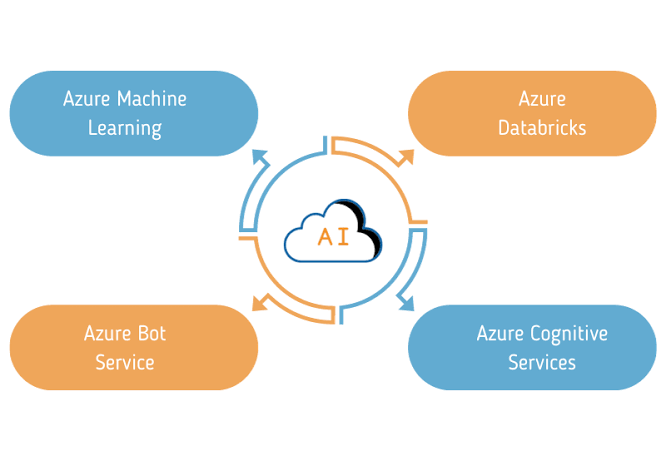
Azure Machine Learning charges for compute clusters ($1.20/hour GPU) plus storage; training a model for 100 hours costs $120, offset by low-priority Spot instances. Cognitive Services meter per 1000 transactions, Vision API at $1 for the first million, dropping to $0.50 beyond. OpenAI embeddings run $0.0001/1k tokens, making generative content for blogs affordable at scale.
Optimization Strategies for Savvy Cloud Engineers
Tame bills with Azure Cost Management for budgets/alerts, Advisor for rightsizing (often 20-30% savings), and Blueprints for governance. Tag resources meticulously, auto-scale workloads, and review daily via Excel exports mirroring your analytics habits. In 2026, hybrid benefits and Marketplace third-party optimizations yield 50%+ reductions, fueling growth from SEO strategies to secure infrastructures.
Real-World Impact and Actionable Next Steps
Certified engineers save teams thousands monthly, boosting careers with FinOps skills amid rising Azure adoption. Plug your setup into the Pricing Calculator today, claim $200 free credit, and simulate: five VMs, Functions, 200GB storage totals under $100 optimized. Empower your cloud journey. Precise pricing turns potential pitfalls into predictable power.