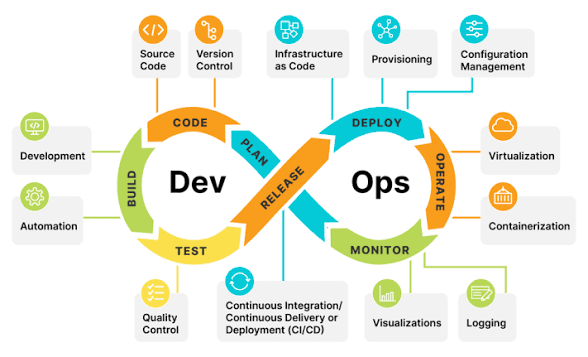
In today’s fast-paced software development landscape, deploying applications quickly and reliably is critical. DevOps practices have transformed how teams build, test, and release software, and cloud deployment tools play a central role in this transformation. These tools help automate infrastructure provisioning, streamline CI/CD pipelines, and ensure consistent deployments across environments.
Whether you are managing microservices, containers, or serverless applications, choosing the right cloud deployment tool can significantly impact your team’s productivity and system reliability.
What Are Cloud Deployment Tools?
Cloud deployment tools are platforms or software solutions that automate the process of delivering applications to cloud environments. They help DevOps teams manage infrastructure, configure environments, and deploy code with minimal manual intervention.
Key functions include:
- Automated application deployment
- Infrastructure provisioning and management
- Continuous Integration and Continuous Deployment (CI/CD)
- Monitoring and rollback capabilities
Top Cloud Deployment Tools for DevOps Teams
1. Jenkins
Jenkins is one of the most widely used open-source automation servers. It enables developers to build, test, and deploy applications through customizable pipelines.
Key features:
- Extensive plugin ecosystem
- Supports CI/CD automation
- Integration with multiple cloud providers
- Highly flexible and customizable
Best for: Teams looking for a powerful and extensible automation tool.
2. GitLab CI/CD
GitLab offers a built-in CI/CD solution integrated with its version control system. It allows teams to manage code repositories and deployment pipelines from a single platform.
Key features:
- End-to-end DevOps lifecycle management
- Built-in CI/CD pipelines
- Secure and scalable deployments
- Strong collaboration tools
Best for: Teams seeking an all-in-one DevOps platform.
3. Kubernetes
Kubernetes is a leading container orchestration platform used to automate the deployment, scaling, and management of containerised applications.
Key features:
- Automated container deployment and scaling
- Self-healing capabilities
- Supports multi-cloud environments
- High availability and fault tolerance
Best for: Organisations running containerised applications at scale.
4. Terraform
Terraform is an Infrastructure as Code (IaC) tool that allows teams to define and provision infrastructure using code.
Key features:
- Multi-cloud compatibility
- Declarative configuration language
- Version-controlled infrastructure
- Automated provisioning
Best for: Teams managing complex cloud infrastructure across providers.
5. AWS CodeDeploy
AWS CodeDeploy automates application deployments across various AWS services, including EC2, Lambda, and on-premises servers.
Key features:
- Automated deployment and rollback
- Integration with the AWS ecosystem
- Supports blue/green deployments
- Scalable and secure
Best for: Teams working within AWS environments.
6. Azure DevOps
Azure DevOps provides a comprehensive suite of development tools, including CI/CD pipelines, repositories, and testing solutions.
Key features:
- Integrated DevOps services
- Flexible deployment pipelines
- Supports multiple programming languages
- Strong enterprise integration
Best for: Enterprises using Microsoft technologies.
7. Google Cloud Deploy
Google Cloud Deploy is a managed service that automates application delivery to Google Kubernetes Engine (GKE) and other Google Cloud services.
Key features:
- Managed deployment pipelines
- Integration with Google Cloud services
- Release tracking and monitoring
- Scalable deployments
Best for: Teams leveraging Google Cloud infrastructure.
8. Ansible
Ansible is an open-source automation tool used for configuration management, application deployment, and task automation.
Key features:
- Agentless architecture
- Simple YAML-based configuration
- Fast and lightweight
- Strong community support
Best for: Teams looking for simple yet powerful automation.
Key Benefits of Cloud Deployment Tools
1. Faster Release Cycles
Automation reduces manual effort, enabling quicker and more frequent deployments.
2. Improved Reliability
Consistent deployment processes minimise errors and downtime.
3. Scalability
Cloud deployment tools allow applications to scale efficiently based on demand.
4. Better Collaboration
DevOps tools integrate development and operations workflows, improving team coordination.
5. Cost Efficiency
Automation and resource optimisation help reduce operational costs.
How to Choose the Right Cloud Deployment Tool
When selecting a cloud deployment tool, consider the following factors:
- Infrastructure compatibility: Ensure it supports your cloud provider
- Ease of use: Look for intuitive interfaces and documentation
- Integration capabilities: Compatibility with your existing DevOps stack
- Scalability: Ability to handle growing workloads
- Security features: Role-based access and compliance support