Containers power modern cloud applications, but their shared kernel design creates unique security challenges that demand proactive measures. Container security best practices in cloud environments ensure your Kubernetes clusters and Docker deployments remain resilient against exploits, misconfigurations, and runtime threats. For digital marketers scaling customer-facing platforms or BBA students building cloud-native projects, these strategies protect your infrastructure while maintaining deployment velocity.
Why Container Security Demands Immediate Attention
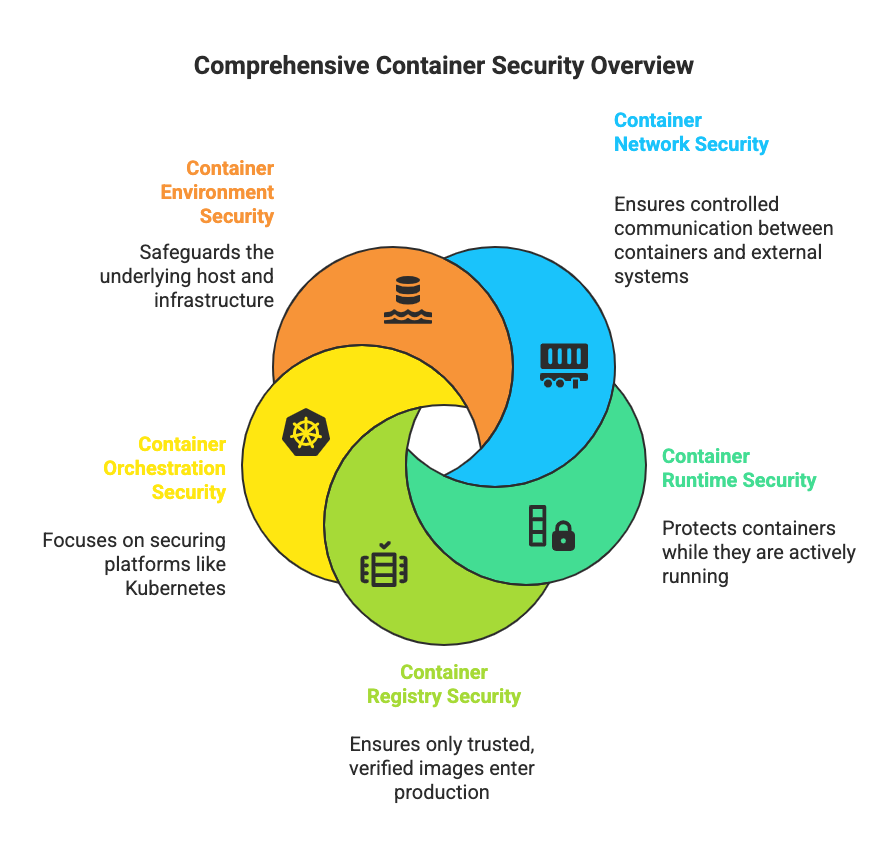
Cloud containers face amplified risks due to their ephemeral nature and dynamic scaling. Attackers target image vulnerabilities, privilege escalation paths, and network misconfigurations that traditional firewalls miss. Container security best practices address these by embedding protection across the entire lifecycle, from image creation through runtime execution.
Build Secure Images from the Foundation
Container security best practices begin with minimal, trusted base images like distroless or Alpine Linux instead of full OS distributions. These reduce attack surfaces by eliminating unnecessary binaries and packages that attackers could exploit. Always scan images during CI/CD using vulnerability scanners before pushing to private registries, automatically failing builds with critical or high-severity findings.
Implement Runtime Privilege Restrictions
Never run containers as root, a fundamental container security best practice that prevents privilege escalation attacks. Configure non-root users through Dockerfiles and Kubernetes security contexts, explicitly dropping all Linux capabilities except those absolutely required. Disable host namespace sharing, including PID, IPC, and network namespaces, to maintain strict isolation boundaries.
Enforce Network Micro-Segmentation
Default-deny network policies form the backbone of container security best practices in cloud environments. Implement Kubernetes NetworkPolicies that explicitly allow only required traffic between pods, services, and external endpoints. Layer Calico or Cilium for advanced Layer 7 filtering and encryption to prevent lateral movement during breaches.
Secure Secrets and Configuration Management
Hardcoded credentials represent one of the most common container security failures. Externalize all secrets using cloud-native vaults like AWS Secrets Manager, Azure Key Vault, or HashiCorp Vault integrated through Kubernetes operators. Rotate credentials automatically and audit access patterns to detect anomalous behavior early.
Continuous Vulnerability Management
Container security best practices require ongoing image scanning beyond initial CI/CD checks. Deploy image scanners as admission controllers that block vulnerable images from ever reaching production clusters. Maintain Software Bill of Materials (SBOM) for all container images to track dependencies and receive automated notifications about newly discovered vulnerabilities.
Runtime Threat Detection and Response
Deploy behavioral monitoring tools like Falco that trigger alerts on suspicious activities such as shell spawns, privilege escalations, or unexpected file access within containers. Use eBPF-based runtime security platforms for zero-overhead monitoring that captures both known attack signatures and anomalous behavior patterns across your entire cloud container fleet.
Harden Kubernetes Control Plane Security
Secure the Kubernetes API server with RBAC policies following least privilege principles, eliminating cluster-admin ClusterRoles except for bootstrap operations. Enable Pod Security Standards in restricted mode to enforce security contexts, filesystem immutability, and capability restrictions across all workloads automatically.
Implement Immutable Infrastructure Principles
Container security best practices in cloud environments embrace immutability by treating running containers as disposable. Configure read-only root filesystems and avoid writable volumes whenever possible. Use GitOps tools like ArgoCD or Flux to ensure infrastructure state matches declarative Git repositories, preventing drift that attackers could exploit.
Multi-Stage CI/CD Security Gates
Integrate multiple security scanning layers throughout your pipeline: Software Composition Analysis for dependencies, Static Application Security Testing for source code, Dynamic Analysis for running containers, and Infrastructure as Code scanning for Kubernetes manifests and Terraform configurations. Container security best practices treat security as a quality gate that must pass at every stage.
Cloud Provider-Specific Hardening
Leverage native cloud security services aligned with container security best practices. On AWS EKS, enable IAM Roles for Service Accounts and integrate with GuardDuty for runtime threat detection. Azure AKS users should deploy Azure Defender for Containers with Microsoft Defender integration. Google GKE benefits from Binary Authorization and Gatekeeper policy enforcement.
Regular Security Benchmark Compliance
Conduct weekly CIS Kubernetes Benchmark assessments using tools like kube-bench to identify configuration drift. Maintain audit trails through centralized logging solutions that capture both control plane and application logs. Container security best practices include regular penetration testing focused specifically on container escape scenarios and cluster compromise paths.
Zero Trust Network Architecture
Implement service mesh architectures like Istio or Linkerd, providing mutual TLS encryption and identity-based authorization between all container-to-container communications. Verify workload identity using SPIFFE and SPIRE frameworks before permitting network connections, eliminating implicit trust relationships.
Automated Compliance and Reporting
Generate compliance reports automatically from security scanning results and runtime monitoring telemetry. Map findings against frameworks like NIST 800-190, PCI-DSS container requirements, and SOC 2 controls. Container security best practices in cloud environments ensure audit readiness through continuous evidence collection without manual intervention.
Team Training and Security Champions
Success with container security best practices requires organizational commitment beyond technical controls. Designate security champions within each development team responsible for pipeline security gates and vulnerability triage. Conduct regular container security workshops using attack-only tools like CTFd to build muscle memory for threat scenarios.
Start Small, Scale Securely
Begin implementing container security best practices with just three priorities: minimal base images, non-root containers, and network policy enforcement. Gradually layer additional controls as your team gains confidence and tooling matures. The compound effect of consistent incremental improvements creates dramatically more secure cloud container environments over time.
These container security best practices in cloud environments transform vulnerability exposure into a competitive advantage, enabling faster innovation with enterprise-grade protection.