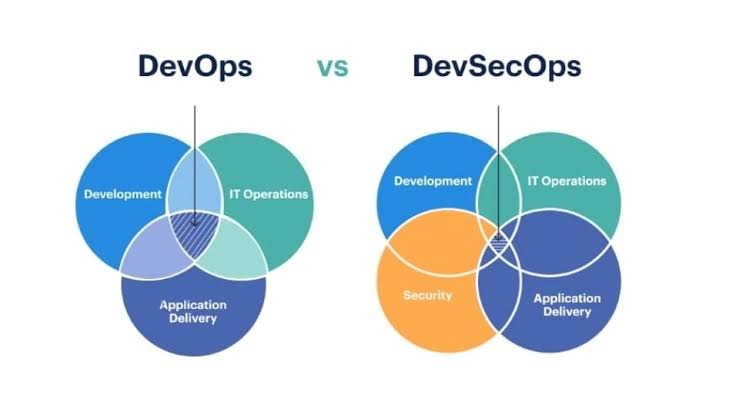
In today's fast-paced digital world, where cloud environments power everything from e-commerce platforms to AI-driven apps, security cannot be an afterthought. Enter DevSecOps, the game-changer that's weaving security seamlessly into your cloud DevOps pipelines. If you are a developer, ops engineer, or digital marketer scaling cloud infrastructure (think AWS, Azure, or Google Cloud), understanding DevSecOps explained in simple terms is crucial. No more bolt-on security fixes that slow you down; this approach makes security a shared responsibility from day one.
Gone are the days when security teams were siloed, reviewing code only at release time. Integrating security into DevOps means shifting left, catching vulnerabilities early in the development cycle. In this detailed guide, we will break down what DevSecOps is, why it matters for cloud setups, real-world implementation steps, top tools, and best practices. By the end, you will have a blueprint to secure your cloud DevOps workflow without sacrificing speed.
What is DevSecOps? A Simple Breakdown
DevSecOps builds on DevOps principles but adds "Sec" for security. It is a cultural and technical shift where development (Dev), operations (Ops), and security (Sec) teams collaborate continuously. Instead of treating security as a checkpoint, it is automated into every stage: plan, code, build, test, release, deploy, and monitor.
Picture this: You are building a cloud-native app on Kubernetes. Traditional DevOps might deploy it fast, but a hacker exploits a misconfigured API. DevSecOps scans that code in real-time, flags the issue, and suggests fixes before it hits production. According to the 2024 State of DevSecOps Report by GitLab, teams using DevSecOps reduce vulnerability resolution time by 70%.
Key pillars of DevSecOps explained:
- Automation: Security checks run as code (IaC) in CI/CD pipelines.
- Collaboration: Tools and dashboards unite teams, no more "security slows us down" blame game.
- Shift Left: Embed security in IDEs and early testing, not just at the end.
- Continuous Monitoring: Post-deployment scans for threats in cloud environments.
For cloud DevOps, this is vital because public clouds amplify risks, such as data breaches like the 2023 Capital One incident, costing millions.
Why DevSecOps Matters in Cloud DevOps Environments
Cloud adoption exploded. Gartner predicts 95% of new digital workloads will be cloud-based by 2025. However, with great scale comes great risk: misconfigurations, container vulnerabilities, and serverless exploits. Integrating security into DevOps via DevSecOps addresses these head-on.
The Cloud-Specific Challenges It Solves
Cloud DevOps thrives on agility, but security lags create gaps:
- Dynamic Infrastructure: Auto-scaling resources mean constant change; manual audits fail.
- Multi-Cloud Complexity: Juggling AWS S3 buckets, Azure VMs, and GCP functions multiplies attack surfaces.
- Compliance Pressures: GDPR, HIPAA, or PCI-DSS demand automated proof of security.
Benefits of DevSecOps in cloud setups:
- Speed Without Sacrifice: Automate scans to deploy 50% faster (per Puppet's report).
- Cost Savings: Fix bugs early; it is 100x cheaper than production fixes.
- Reduced Breach Risk: Proactive detection cuts severe vulnerabilities by 60% (Sonatype data).
- Scalable Compliance: Generate audit-ready reports from pipelines.
Real example: Netflix uses DevSecOps in its cloud DevOps stack on AWS, running thousands of daily deployments with "paved roads" for secure practices. Result? Minimal downtime, even during peak streaming.
How to Implement DevSecOps: Step-by-Step Guide
Ready to integrate? Here is a practical roadmap for cloud DevOps security. Start small—pilot on one pipeline—then scale.
Step 1: Assess and Plan
- Audit current pipelines: Use tools like AWS Config or Azure Security Center to map risks.
- Define security requirements: Align with frameworks like NIST or OWASP Top 10.
- Foster culture: Train teams via workshops (pro tip: Gamify with CTF challenges).
Step 2: Automate Security in CI/CD
Integrate scans into Jenkins, GitHub Actions, or GitLab CI:
- SAST (Static Application Security Testing): Scan source code pre-build.
- DAST (Dynamic Testing): Test running apps for runtime flaws.
- SCA (Software Composition Analysis): Check open-source dependencies.
Step 3: Secure Cloud Infrastructure as Code (IaC)
Tools like Terraform or CloudFormation need security gates:
- Scan IaC for misconfigs (e.g., open S3 buckets).
- Use policy-as-code: Open Policy Agent (OPA) enforces rules like "no public RDS."
Step 4: Container and Kubernetes Security
For cloud-native:
- Image scanning with Trivy or Clair.
- Runtime protection via Falco for anomaly detection.
- Network policies in Kubernetes to block lateral movement.
Step 5: Monitor and Respond Continuously
- SIEM integration: Splunk or ELK for logs.
- Chaos engineering: Test resilience with tools like Gremlin.
Top DevSecOps Tools for Cloud DevOps in 2026
Choosing DevSecOps tools? Focus on cloud-native ones with seamless integrations.
- Snyk: Auto-fixes vulnerabilities in code, containers, and IaC. Free tier for startups.
- Checkmarx: AI-powered SAST/DAST for multi-cloud.
- Prisma Cloud (Palo Alto): Full-stack protection for AWS/Azure/GCP/K8s.
- Sysdig Secure: Runtime monitoring with AI threat hunting.
- GitLab DevSecOps: All-in-one if you are on GitLab, with built-in scanners.
For Indian devs (shoutout to Meerut's growing tech scene), tools like these pair well with affordable cloud credits from AWS Activate or Azure for Startups.
DevSecOps best practices pro tip: Start with open-source like OWASP ZAP for DAST, zero cost, high impact.
Common Pitfalls and DevSecOps Best Practices
Even pros stumble. Avoid these:
- Pitfall 1: Tool overload, pick 3-5 that integrate.
- Pitfall 2: Ignoring the culture mandate "security champions" per team.
- Pitfall 3: False positives tune alerts with ML feedback loops.
DevSecOps best practices:
- Measure with DORA metrics: Deployment frequency, MTTR for vulns.
- Run weekly "SecReviews" like code reviews.
- Automate 80% of checks; humans handle edge cases.
- Stay updated: Follow CNCF's security working group.
Case study: Adobe's DevSecOps shift cut breach risks by 90% in their cloud DevOps, enabling 10,000+ daily deploys.
Future of DevSecOps in Cloud: AI and Beyond
By 2026, AI-driven DevSecOps will dominate the autonomous threat hunting. Zero-trust architectures and confidential computing (e.g., AWS Nitro) will be standard.