The Internet of Things (IoT) is transforming how devices interact with each other and with people. From smart homes and wearable fitness trackers to industrial automation and smart cities, IoT systems are connecting billions of devices worldwide.
However, how do these systems actually work? In this guide, we will break down how IoT systems operate, their architecture, key components, and real world applications, helping you understand why IoT is one of the most important technologies shaping the digital future.
What Are IoT Systems?
An IoT (Internet of Things) system is a network of physical devices connected to the internet that collect, exchange, and analyze data. These devices include sensors, software, and communication technologies that enable them to interact with other systems.
In simple terms, IoT systems allow everyday objects to become “smart” by connecting them to the internet. For example:
- Smart thermostats that automatically adjust temperature
- Fitness trackers that monitor your health
- Smart refrigerators that track food inventory
- Industrial machines that predict maintenance needs
By collecting and sharing data, IoT systems help automate processes, improve efficiency, and enhance decision-making.
Key Components of IoT Systems
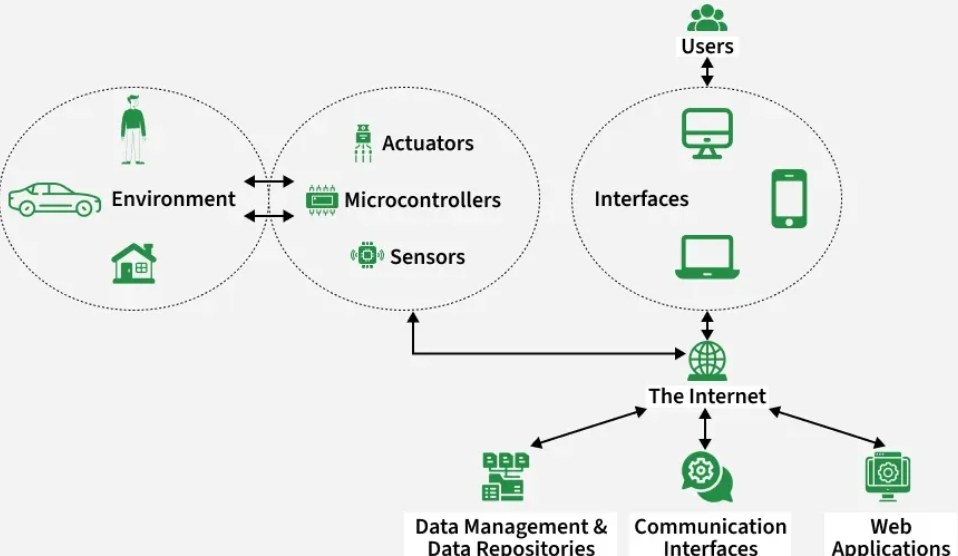
Every IoT system is built around several essential components that work together to collect and process information.
1. IoT Devices and Sensors
Sensors are the foundation of any IoT system. They collect data from the physical environment, such as:
- Temperature
- Humidity
- Motion
- Light
- Pressure
For example, a smart home security camera uses sensors to detect motion and send alerts to the homeowner.
2. Connectivity
Once data is collected, it must be transmitted to other devices or servers. IoT systems rely on different connectivity technologies, such as:
- Wi-Fi
- Bluetooth
- Cellular networks (4G/5G)
- LPWAN (Low Power Wide Area Networks)
- Zigbee or LoRaWAN
These communication protocols allow devices to send data to the cloud or other devices in real time.
3. Data Processing
After the data is transmitted, it is processed either:
- On the device (edge computing)
- On a cloud server
Processing converts raw sensor data into useful information. For instance, a smart thermostat analyzes temperature data and decides whether to turn on heating or cooling.
4. Cloud Computing and Storage
Many IoT systems rely on cloud platforms to store large amounts of data. Cloud computing enables:
- Data analytics
- Machine learning processing
- Remote monitoring
- Device management
This makes IoT systems scalable and easier to manage from anywhere.
5. User Interface
Finally, users interact with IoT systems through apps or dashboards. These interfaces allow users to:
- Monitor devices
- Receive alerts
- Control settings remotely
For example, a smartphone app lets users control lights, locks, and appliances in a smart home.
How IoT Systems Work: Step-by-Step Process
Understanding the workflow of an IoT system makes it easier to see how these technologies operate in real-world environments.
Step 1: Data Collection
Sensors and IoT devices collect environmental data. For example, a soil sensor in agriculture measures moisture levels in the soil.
Step 2: Data Transmission
The collected data is transmitted through a communication network such as Wi-Fi, cellular, or Bluetooth.
Step 3: Data Processing
The system processes the data using algorithms or cloud computing platforms to interpret what the information means.
Step 4: Decision or Action
Based on the processed data, the system takes action automatically. For instance, an irrigation system may start watering crops when soil moisture drops below a certain level.
Step 5: User Notification
Users receive alerts or insights via mobile apps or dashboards, allowing them to monitor and control devices remotely.
Real-World Applications of IoT Systems
IoT technology is rapidly expanding across many industries. Here are some of the most common applications.
Smart Homes
Smart homes use IoT devices to automate daily tasks. Examples include:
- Smart lighting systems
- Smart thermostats
- Voice assistants
- Smart security systems
These devices improve comfort, security, and energy efficiency.
Healthcare
IoT is revolutionizing healthcare through connected medical devices such as:
- Wearable fitness trackers
- Remote patient monitoring systems
- Smart medical equipment
Doctors can monitor patients remotely and detect health issues earlier.
Smart Cities
Cities are using IoT technology to improve urban infrastructure, including:
- Smart traffic management systems
- Intelligent street lighting
- Waste management monitoring
These solutions help reduce congestion, energy consumption, and pollution.
Industrial IoT (IIoT)
Industries use IoT systems to optimize manufacturing and operations. Examples include:
- Predictive maintenance for machinery
- Supply chain monitoring
- Automated production lines
This increases efficiency and reduces operational costs.
Agriculture
IoT helps farmers improve crop production using:
- Soil moisture sensors
- Weather monitoring systems
- Smart irrigation systems
These technologies help optimize water usage and increase crop yield.
Benefits of IoT Systems
IoT technology offers many advantages for businesses and individuals.
Improved Efficiency
Automation reduces manual work and streamlines operations.
Better Decision-Making
Real-time data helps organizations make informed decisions.
Cost Savings
Predictive maintenance and energy management reduce expenses.
Enhanced User Experience
Smart devices provide convenience and personalized services.
Challenges of IoT Systems
Despite its benefits, IoT technology also faces several challenges.
Security Risks
Connected devices can be vulnerable to cyberattacks if not properly secured.
Data Privacy Concerns
IoT systems collect large amounts of personal data, which must be protected.
Device Compatibility
Different manufacturers may use different standards, making integration difficult.
Network Reliability
IoT devices depend heavily on stable internet connectivity.
The Future of IoT Technology
The future of IoT looks extremely promising. With the growth of 5G networks, artificial intelligence, and edge computing, IoT systems will become faster, smarter, and more efficient.
Experts predict that billions of IoT devices will be connected globally within the next decade, powering innovations in smart cities, healthcare, transportation, and industry.
As technology continues to evolve, IoT will play a crucial role in building a more connected and intelligent world.