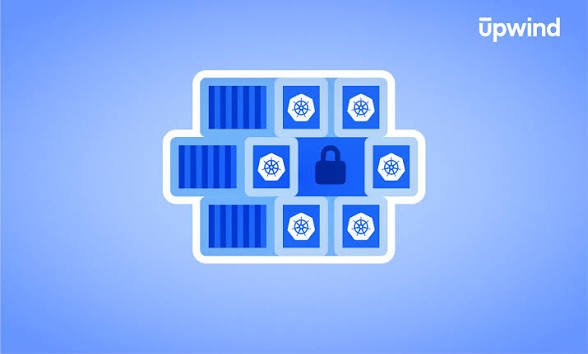
Kubernetes powers the majority of cloud-native applications, but its complexity creates expansive attack surfaces that demand rigorous security measures. Kubernetes security best practices for cloud infrastructure protect your EKS, AKS, and GKE clusters from privilege escalation, pod escapes, and lateral movement attacks. For digital marketers scaling microservices or BBA students building cloud portfolios, these strategies ensure compliance, reliability, and customer trust in production environments.
Control Plane Hardening Forms the Foundation
Kubernetes security best practices begin with securing the API server, etcd, and controller manager through proper cloud provider configurations. Enable RBAC with least privilege principles, eliminating cluster-admin ClusterRoles except for bootstrap operations. Disable insecure anonymous authentication and default service account token mounting across all deployments.
Implement Pod Security Standards Enforcement
Kubernetes Pod Security Standards represent a cornerstone of Kubernetes security best practices for cloud infrastructure. Enforce the restricted profile across namespaces to automatically apply non-root containers, capability restrictions, forbidden sysctls, and read-only root filesystems. Use admission controllers to reject non-compliant pods before they impact cluster security posture.
Network Policies Enable Micro-Segmentation
Default-deny network policies form essential Kubernetes security best practices that prevent lateral movement during breaches. Create explicit NetworkPolicy resources allowing only required pod-to-pod and pod-to-service communications. Deploy Calico, Cilium, or AWS VPC CNI with native network policy support for Layer 7 filtering and encryption in cloud VPCs.
Service Account Token Security is Critical
Kubernetes security best practices for cloud infrastructure mandate projecting service account tokens only when necessary. Configure workloads to use the TokenRequest API for short-lived tokens instead of mounting long-lived secrets. Implement ImagePolicyWebhook admission controllers to validate container images against approved registries exclusively.
Etcd Encryption Protects Cluster State
Enable encryption at rest for etcd using cloud provider-managed keys or customer-managed KMS integration. Kubernetes security best practices require separating etcd authentication from API server credentials and implementing network encryption between control plane components. Regularly rotate etcd certificates and audit access patterns through cloud logging services.
Namespace Isolation and Resource Quotas
Create explicit namespaces for different trust zones with distinct RBAC policies and network policies. Kubernetes security best practices for cloud infrastructure include implementing ResourceQuotas and LimitRanges to prevent denial-of-service attacks through resource exhaustion. Deploy NetworkPolicies isolating dev, staging, and production namespaces completely.
Admission Controller Policy Enforcement
Deploy policy engines like OPA Gatekeeper, Kyverno, or native ValidatingAdmissionWebhook for Kubernetes security best practices. Create policies blocking hostPath volumes, privileged containers, hostNetwork access, and mutable probes. Validate Infrastructure as Code templates during CI/CD pipelines before applying to production clusters.
Secrets Management Requires Externalization
Never store sensitive data as Kubernetes Secrets due to base64 encoding visibility. Kubernetes security best practices mandate external secrets management using cloud vaults through operators like External Secrets Operator or Sealed Secrets. Implement automatic credential rotation and audit access through cloud-native IAM services.
Runtime Security Monitoring is Non-Negotiable
Deploy Falco, Sysdig, or Tetragon for behavioral monitoring, detecting shell executions, privilege escalations, and suspicious file access within containers. Kubernetes security best practices for cloud infrastructure include eBPF-based runtime protection, capturing both known attack signatures and zero-day anomalous behavior patterns across cluster workloads.
Image Security and Registry Policies
Maintain allowlists of approved container registries and image signing requirements as core Kubernetes security best practices. Deploy image vulnerability scanning as an admission controllers blocking the deployment of images with critical or high-severity vulnerabilities. Generate and maintain Software Bill of Materials for supply chain security compliance.
Workload Identity and Least Privilege RBAC
Replace service account tokens with cloud IAM Roles for Service Accounts (IRSA) on EKS, AAD Pod Identity on AKS, or Workload Identity on GKE. Kubernetes security best practices for cloud infrastructure require granular RBAC policies following the principle of least privilege across all cluster operations and resources.
Audit Logging and Compliance Monitoring
Enable Kubernetes audit logging at the Request level, capturing all API interactions. Kubernetes security best practices include forwarding logs to cloud SIEM solutions like AWS CloudTrail, Azure Monitor, or Google Cloud Audit Logs. Implement alerting on failed authorization attempts and RBAC modifications for real-time threat detection.
Immutable Infrastructure Through GitOps
Treat running pods as immutable using declarative GitOps workflows with ArgoCD or Flux. Kubernetes security best practices for cloud infrastructure prevent configuration drift by automatically reconciling cluster state against Git repositories containing signed YAML manifests. Reject direct kubectl apply operations in production environments entirely.
Regular Benchmark Compliance Validation
Conduct weekly CIS Kubernetes Benchmark assessments using kube-bench or Trivy Operator. Kubernetes security best practices include continuous compliance monitoring against NIST 800-190, PCI-DSS container requirements, and SOC 2 controls. Generate audit-ready evidence automatically from security scanning and monitoring telemetry.
Chaos Engineering Validates Security Posture
Regularly inject realistic failure scenarios using Chaos Mesh or Litmus Chaos to validate security controls under stress. Kubernetes security best practices for cloud infrastructure include testing pod escape scenarios, network policy failures, and RBAC bypass attempts through controlled chaos experiments, building organizational resilience.
Multi-Tenancy Through Namespace Federation
Implement strict multi-tenancy using namespace-scoped RBAC, network policies, and resource quotas, isolating customer workloads completely. Kubernetes security best practices require separate node pools for different trust zones and workload classes, preventing noisy neighbor attacks and resource contention across tenants.
Zero Trust Workload Identity Verification
Deploy service mesh architectures providing mutual TLS encryption and SPIFFE-based workload identity verification between all service communications. Kubernetes security best practices for cloud infrastructure eliminate implicit trust relationships, requiring explicit identity validation before permitting network connections or API access.
Automated Security Gate Implementation
Integrate security scanning across entire CI/CD pipelines, including Static Application Security Testing, Software Composition Analysis, container image scanning, and Infrastructure as Code validation. Kubernetes security best practices treat security as quality gates blocking promotion through environments until all checks pass successfully.
Team Enablement Through Security Champions
Success requires organizational commitment beyond technical controls alone. Kubernetes security best practices for cloud infrastructure include designating security champions within each development team responsible for pipeline security gates, vulnerability triage, and threat modeling exercises, building collective security muscle memory.
Start implementing Kubernetes security best practices with three priorities: RBAC cleanup, Pod Security Standards enforcement, and network policy implementation. Layer additional controls incrementally, creating a dramatically more secure cloud infrastructure supporting business-critical applications reliably.