Cloud computing offers scalability and flexibility, but without proper governance, costs can quickly spiral out of control. Organisations today are increasingly adopting cloud cost optimisation tools to monitor usage, eliminate waste, and ensure maximum return on investment. This guide explores the top tools that help businesses reduce cloud spending while maintaining performance and efficiency.
What Is Cloud Cost Optimisation?
Cloud cost optimisation is the practice of managing and reducing cloud expenses by identifying underutilised resources, selecting cost-effective pricing models, and improving workload efficiency. It involves continuous monitoring, analysis, and automation to ensure you only pay for what you use.
Why Cloud Cost Optimisation Tools Are Essential
Manual tracking of cloud usage is impractical in modern multi-cloud environments. Cost optimization tools provide:
- Real-time visibility into cloud spending
- Recommendations for cost savings
- Automation of resource management
- Budget alerts and forecasting
- Multi-cloud cost tracking
Top Cloud Cost Optimization Tools
1. AWS Cost Explorer
AWS Cost Explorer is a native tool provided by Amazon Web Services that helps users visualize, understand, and manage AWS costs.
Key Features:
- Detailed cost breakdown by service and usage
- Forecasting future expenses
- Custom reports and dashboards
- Integration with AWS Budgets
Best For: Businesses heavily using AWS infrastructure
2. Azure Cost Management
Developed by Microsoft, Azure Cost Management helps organisations monitor and optimize their Azure cloud spending.
Key Features:
- Cost analysis across subscriptions
- Budget tracking and alerts
- Recommendations for resource optimization
- Multi-cloud support via integrations
Best For: Enterprises using Azure or hybrid cloud environments
3. Google Cloud Billing
A powerful cost management solution from Google Cloud designed to provide transparency and control over cloud expenses.
Key Features:
- Real-time billing insights
- Cost breakdown by projects and services
- Budget alerts and anomaly detection
- Export billing data for analysis
Best For: Organizations running workloads on Google Cloud
4. CloudHealth by VMware
CloudHealth is a leading third-party tool that provides deep insights into multi-cloud cost management and governance.
Key Features:
- Multi-cloud cost visibility
- Policy-based automation
- Rightsizing recommendations
- Compliance and governance tracking
Best For: Enterprises managing AWS, Azure, and Google Cloud together
5. Spot by NetApp
Spot focuses on automating cloud infrastructure to reduce costs using AI-driven optimization.
Key Features:
- Automated workload optimization
- Spot instance management
- Continuous cost reduction
- Container cost optimization
Best For: DevOps teams and containerized environments
6. Kubecost
Kubecost is specifically designed for monitoring and optimizing Kubernetes खर्च.
Key Features:
- Cost allocation across Kubernetes resources
- Real-time cost visibility
- Optimization recommendations
- Integration with cloud providers
Best For: Teams using Kubernetes clusters
7. Apptio Cloudability
Cloudability provides financial management and optimization insights for cloud spending.
Key Features:
- Detailed financial reporting
- Budgeting and forecasting
- Rightsizing and waste reduction
- Multi-cloud cost governance
Best For: Large enterprises with complex cloud environments
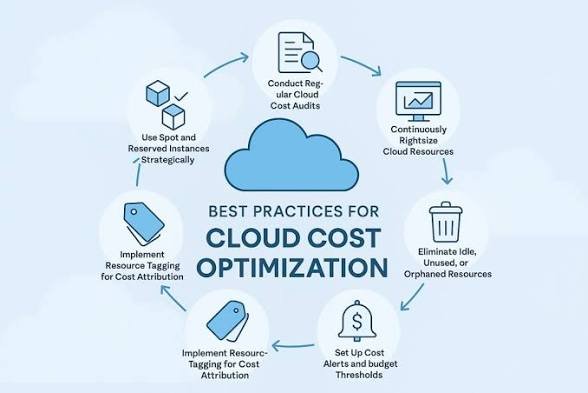
Key Strategies for Reducing Cloud Costs
Using tools alone is not enough. Combine them with these proven strategies:
- Rightsizing resources: Match instance sizes with actual workload needs
- Reserved instances: Commit to long-term usage for discounts
- Auto-scaling: Scale resources dynamically based on demand
- Eliminate idle resources: Shut down unused instances
- Use spot instances: Save costs on non-critical workloads
Choosing the Right Tool
When selecting a cloud cost optimization tool, consider:
- Cloud provider compatibility (AWS, Azure, GCP, or multi-cloud)
- Level of automation required
- Integration with existing DevOps tools
- Reporting and analytics capabilities
- Budget and scalability needs