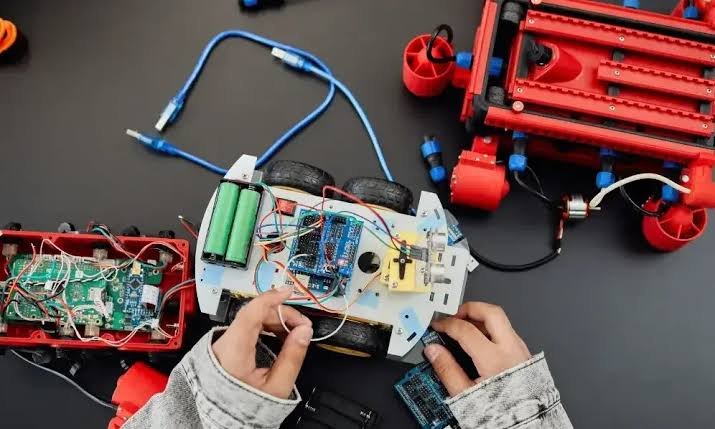
Robotics is one of the most exciting and rapidly growing fields in modern technology. From self-driving cars to automated manufacturing systems, robots are transforming how industries operate and how humans interact with machines. Understanding robotics fundamentals is the first step for anyone interested in robotics, engineering, or automation.
In simple terms, robotics combines mechanical engineering, electronics, and computer programming to design machines capable of performing tasks automatically or semi-automatically. This guide explains the essential concepts every beginner should know to start learning robotics.
What Are Robotics Fundamentals?
Robotics fundamentals refer to the basic principles, technologies, and components that enable robots to function. These include the mechanical structure of the robot, sensors that detect the environment, actuators that create movement, and control systems that guide the robot's behaviour.
A robot is a programmable machine that can perform tasks with minimal human intervention. These tasks may involve movement, object manipulation, data processing, or environmental interaction.
Key Components of a Robot
1. Sensors
Sensors allow robots to collect information from their surroundings. They act as the robot's eyes, ears, and sense of touch.
Common types of sensors include:
- Temperature sensors
- Distance sensors
- Camera or vision sensors
- Touch sensors
Sensors help robots detect obstacles, measure environmental conditions, and make informed decisions.
2. Actuators
Actuators are responsible for creating motion in a robot. They convert electrical energy into physical movement.
Examples include:
- Electric motors
- Hydraulic actuators
- Pneumatic actuators
These components allow robots to move arms, wheels, or other mechanical parts.
3. Controllers
The controller acts as the brain of the robot. It processes information received from sensors and sends commands to actuators.
Controllers can include:
- Microcontrollers
- Embedded processors
- Industrial control systems
These systems ensure the robot operates accurately and efficiently.
4. Power Supply
Every robot requires a reliable power source to operate its components. The power supply may include batteries, electrical power systems, or rechargeable energy sources, depending on the robot's application.
Types of Robots
Robots can be classified into different categories based on their purpose and design.
Industrial Robots
These robots are widely used in manufacturing for tasks such as welding, assembly, and packaging.
Service Robots
Service robots assist humans in everyday tasks. Examples include cleaning robots and delivery robots.
Medical Robots
Medical robots help doctors perform complex surgeries with high precision.
Autonomous Robots
Autonomous robots operate independently using sensors, algorithms, and artificial intelligence.
How Robots Work
Robots operate through a structured process that includes three main stages:
- Perception – Sensors collect data from the environment.
- Processing – The controller analyses the data using programmed algorithms.
- Action – Actuators perform the required movement or task.
This continuous cycle allows robots to interact intelligently with their surroundings.
Applications of Robotics
Robotics is used across many industries, including:
- Manufacturing and industrial automation
- Healthcare and robotic surgery
- Space exploration
- Agriculture and smart farming
- Logistics and warehouse automation
As technology advances, robotics continues to expand into new areas of everyday life.
Why Learning Robotics Fundamentals Is Important
Understanding robotics fundamentals helps students, engineers, and technology enthusiasts develop skills needed for future careers. Robotics also promotes innovation, problem-solving, and interdisciplinary learning, combining hardware and software development.
With automation becoming more common worldwide, knowledge of robotics is increasingly valuable in industries such as artificial intelligence, electronics, and mechanical engineering.