Focus Keyword: Cloud Services Comparison
Meta Description: Azure vs AWS vs Google Cloud detailed comparison without tables for businesses. Explore pricing, services, security, AI capabilities and hybrid support across top cloud platforms to make informed enterprise decisions.
Short Description:
Discover Azure vs AWS vs Google Cloud strengths for different business workloads and industries.
Discover which cloud platform best matches your technical requirements and existing ecosystem.
Azure vs AWS vs Google Cloud: Detailed Comparison for Businesses
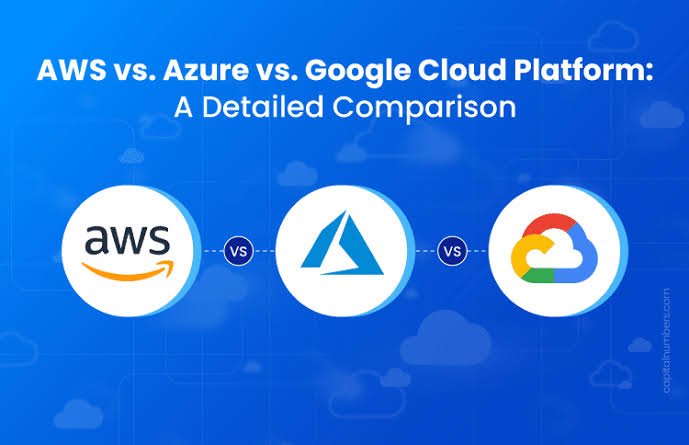
Choosing between Azure, AWS, and Google Cloud in 2026 demands understanding each platform's unique strengths across compute power, cost efficiency, AI innovation, and enterprise integration. AWS maintains market leadership with unmatched service breadth, Azure dominates Microsoft-centric enterprises, while Google Cloud accelerates AI-driven transformation. This table-free comparison guides businesses through technical capabilities, pricing models, and strategic fit.
Market Leadership and Adoption Patterns
AWS commands 31% global market share with 17 years of enterprise-proven reliability across 33 regions. Azure captures 25% through deep Microsoft ecosystem integration. Office 365, Dynamics CRM, and SQL Server users find seamless transitions. Google Cloud's 12% reflects rapid AI/ML growth, attracting data scientists and analytics-heavy enterprises.
Enterprises favor AWS for production stability, Azure for hybrid Windows environments, and GCP for cutting-edge innovation. Most Fortune 500 companies run multi-cloud strategically, leveraging each platform's strongest capabilities.
Compute Powerhouse Comparison
AWS EC2 offers 750+ instance types from $3.50/month nano instances to $32,000/month bare-metal clusters. Azure Virtual Machines provide 900+ SKUs optimized for Windows workloads with D-series v5 instances delivering EPYC Genoa performance. Google Compute Engine excels with custom machine types and Tau T2A ARM instances at the lowest cost-per-core.
Serverless execution favors Azure Functions for Microsoft integrations, AWS Lambda for ecosystem maturity, and Google Cloud Run for container-native developers. Container orchestration sees Google Kubernetes Engine (GKE) leading with Anthos multi-cloud support, though Azure Kubernetes Service (AKS) gains rapidly in enterprise adoption.
Storage Economics and Capabilities
Azure Blob Storage leads pricing at $0.0184/GB monthly versus AWS S3 ($0.023/GB) and Google Cloud Storage ($0.020/GB). All three guarantee 11 nines (99.999999999%) object durability through geo-redundant replication. AWS S3 Intelligent-Tiering automatically optimizes access patterns, while Google Cloud Storage's Coldline storage classes excel for analytics workloads.
Block storage performance peaks with Azure Ultra Disks (160K IOPS), AWS EBS io2 Block Express (256K IOPS), and Google Hyperdisk (1M IOPS). File sharing sees Azure Files SMB support winning Windows environments, while AWS EFS dominates Linux scalability.
Database Supremacy Battle
Azure SQL Database auto-pauses serverless instances during idle periods, saving 85% on dev/test costs. AWS RDS offers the broadest engine support (19 databases), while Google Cloud SQL provides managed MySQL/PostgreSQL with 99.99% uptime guarantees.
NoSQL territory splits three ways: AWS DynamoDB handles 10 trillion requests daily at submillisecond latency, Azure Cosmos DB offers five consistency models for global apps, and Google Firestore powers mobile backends with offline sync. Analytics workloads overwhelmingly favor Google BigQuery's serverless 1TB/month free tier versus Azure Synapse and AWS Redshift Spectrum.
Artificial Intelligence Leadership
Google Cloud dominates AI infrastructure with Tensor Processing Units (TPUs) at $1.20/hour versus AWS Trainium ($3.50/hour). Vertex AI provides production-grade model serving, while Azure OpenAI Service offers enterprise-grade GPT access with content moderation. AWS Bedrock supports multiple foundation models but trails in custom training capabilities.
Pre-built AI sees Azure Cognitive Services leading speech recognition (95% accuracy), Google Vision API excelling in object detection, and AWS Rekognition dominating facial analysis compliance.
Global Networking Performance
Google's private global fiber network delivers sub-50ms latency worldwide, powering YouTube-scale streaming. Azure's 60+ regions provide the broadest geographic coverage for data residency compliance. AWS CloudFront CDN processes 3 trillion requests daily with the fastest cold-start times.
Hybrid connectivity favors Azure ExpressRoute (50% faster than AWS Direct Connect), while Google Dedicated Interconnect offers predictable flat-rate pricing regardless of data volume transferred.
Enterprise Security Maturity
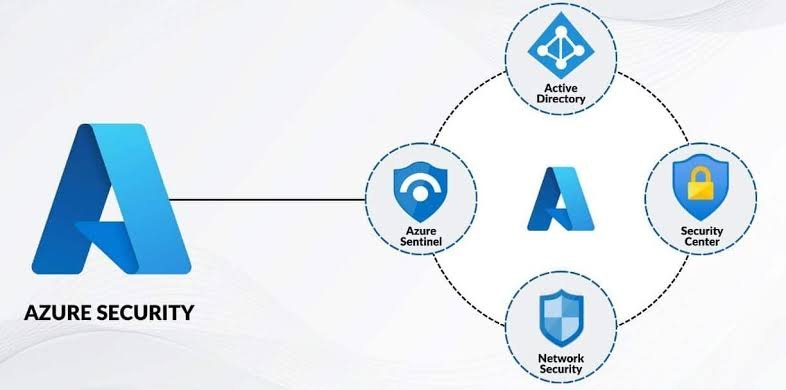
Azure Entra ID Conditional Access blocks 99.9% account compromise attempts through risk-based policies. AWS Nitro System hardware isolates each VM instance at the silicon level. Google BeyondCorp implements zero-trust access natively across all services.
Compliance coverage spans 100+ frameworks across platforms, though Azure leads healthcare (HIPAA BAA standard) and AWS dominates financial services (PCI-DSS pioneer).
Pricing Transparency and Savings
On-demand pricing favors Azure B1s instances ($0.0048/hour) over AWS t4g.nano ($0.0052/hour) and Google e2-micro ($0.006/hour). Long-term commitments yield Azure Reserved Instances at 72% savings, AWS Savings Plans at 66%, and Google Committed Use Discounts at 57%.
Free tiers position Google most generously (always-free BigQuery analytics), followed by AWS (750 hours t2.micro monthly), with Azure offering a $200 credit plus 12-month free popular services.
Developer Productivity Tools
Azure DevOps provides integrated CI/CD, repos, boards, and testing for Microsoft stacks. AWS CodePipeline offers the broadest third-party integrations. Google Cloud Build accelerates container-native pipelines with 120 build minutes free daily.
Infrastructure as Code sees Terraform universal adoption, though Azure ARM templates and AWS CloudFormation provide native simplicity. CLI experience favors Azure CLI's straightforward syntax over AWS CLI v2 complexity.
Hybrid and Multi-Cloud Reality
Azure Arc extends Resource Manager to any infrastructure worldwide, Kubernetes, VMs, SQL Server, anywhere. Google Anthos focuses on Kubernetes multi-cloud excellence but lacks broad VM support. AWS Outposts provides a limited rack-scale hybrid footprint.
82% of enterprises run multi-cloud per the Flexera 2026 report, typically analytics on GCP, transactional workloads on AWS/Azure, and hybrid Windows apps on Azure.
Industry-Specific Recommendations
Financial services enterprises choose Azure for regulatory compliance and mainframe hybrid connectivity. Healthcare providers prefer AWS HIPAA maturity and partner ecosystem depth. Retail businesses leverage Azure Dynamics 365 integration. Media companies favor Google Cloud video transcoding economics. Startups prioritize GCP's generous free tier and AI acceleration.
Strategic Multi-Cloud Architecture
Most successful enterprises avoid vendor lock-in through workload-specific optimization: place analytics on BigQuery, production e-commerce on AWS/Azure, development environments on cost leaders, and AI experimentation on Google Cloud. Cross-cloud networking via Aviatrix or Megaport simplifies operations.
Cloud selection ultimately balances existing technology investments, team expertise, geographic requirements, and workload characteristics. Begin with proof-of-concept measuring actual performance economics before strategic commitments. Most enterprises discover that multi-cloud delivers optimal business outcomes.