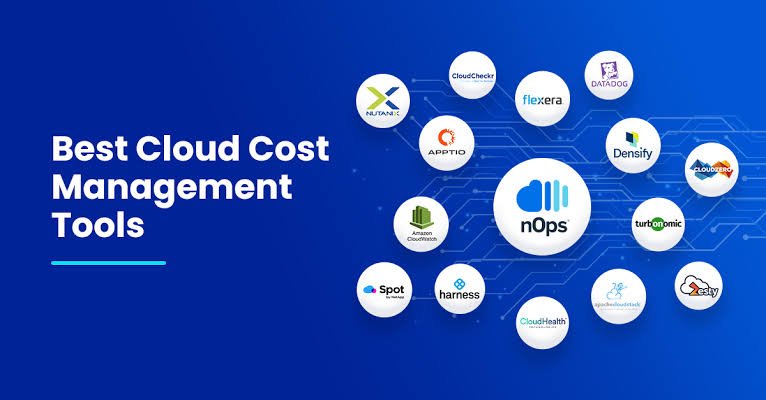
As enterprises scale their cloud infrastructure, managing costs becomes increasingly complex. With multi-cloud environments and dynamic workloads, uncontrolled spending can quickly escalate. Cloud cost management platforms help organizations gain visibility, enforce governance, and optimize resource utilization.
These platforms are a critical part of FinOps strategies, enabling collaboration between finance, operations, and engineering teams to control and forecast cloud expenses effectively.
What Are Cloud Cost Management Platforms?
Cloud cost management platforms are tools designed to monitor, analyze, and optimize cloud spending across providers like AWS, Azure, and Google Cloud.
Core capabilities include:
- Real-time cost tracking and reporting
- Budgeting and forecasting
- Resource optimization and rightsizing
- Cost allocation and chargeback
- Automation and anomaly detection
Large enterprises heavily rely on these tools, with adoption driven by the need for visibility and financial accountability in cloud environments.
Top Cloud Cost Management Platforms for Enterprises
1. Apptio Cloudability
Apptio Cloudability is a leading FinOps platform designed for large enterprises managing multi-cloud environments.
Key features:
- Advanced cost allocation and reporting
- Budgeting and forecasting tools
- Multi-cloud support (AWS, Azure, GCP)
- Strong governance and compliance
Why it stands out: Organizations using Cloudability have reported up to 25% cost reduction through better visibility and optimization
Best for: Enterprises focused on financial accountability and FinOps maturity.
2. CloudHealth by VMware
CloudHealth by VMware is widely adopted by large organizations for cost governance and optimization.
Key features:
- Policy-based cost governance
- Multi-cloud cost visibility
- Resource utilization insights
- Automation for cost control
Why it stands out: Used by a significant portion of Fortune 500 companies for managing cloud cost governance
Best for: Enterprises requiring strong governance and compliance.
3. Spot by NetApp
Spot by NetApp focuses on automation and AI-driven cost optimization.
Key features:
- Automated resource scaling
- AI-based cost optimization
- Spot instance management
- Continuous cost reduction
Why it stands out: Helps organizations reduce cloud costs by up to 70% through automation
Best for: DevOps teams and dynamic workloads.
4. Flexera One
Flexera One provides a comprehensive view of cloud costs along with IT asset management.
Key features:
- Unified cost visibility across hybrid environments
- License and asset optimization
- Budget forecasting and analytics
- Integration with ITSM tools
Why it stands out: Combines FinOps with IT asset management for deeper cost control
Best for: Enterprises with complex IT ecosystems.
5. IBM Turbonomic
IBM Turbonomic uses AI to optimize cloud resource usage and costs.
Key features:
- AI-driven workload optimization
- Automated scaling decisions
- Real-time performance-cost balance
- Hybrid cloud support
Why it stands out: Focuses on performance-aware cost optimization for enterprise workloads
Best for: Performance-critical applications.
6. CloudCheckr
CloudCheckr offers cost optimization with a strong focus on compliance and reporting.
Key features:
- Detailed cost analytics and reporting
- Compliance and security insights
- Multi-cloud support
- Budget tracking
Why it stands out: Organizations report 20–30% savings after implementation
Best for: Enterprises with strict compliance requirements.
7. Harness Cloud Cost Management
Harness Cloud Cost Management integrates cost control into CI/CD and DevOps workflows.
Key features:
- Continuous cost visibility
- Integration with CI/CD pipelines
- Kubernetes cost tracking
- Automated governance
Why it stands out: Bridges the gap between DevOps and FinOps practices
Best for: DevOps-driven organizations.
8. Kubecost
Kubecost is an open-source platform focused on Kubernetes cost tracking.
Key features:
- Real-time Kubernetes cost monitoring
- Cost allocation by service/team
- Optimization recommendations
- Multi-cloud Kubernetes support
Why it stands out: Ideal for containerized environments and microservices architectures
Best for: Kubernetes-heavy infrastructures.
Key Benefits of Cloud Cost Management Platforms
1. Improved Cost Visibility
Gain real-time insights into cloud spending across departments and services.
2. Cost Optimization
Identify unused resources and optimize workloads to reduce waste.
3. Financial Accountability
Enable chargeback and showback models for better budgeting.
4. Automation and Efficiency
Automate scaling, scheduling, and resource allocation to minimize costs.
5. Multi-Cloud Governance
Manage and control spending across AWS, Azure, and GCP from a single platform.
How to Choose the Right Platform
When selecting a cloud cost management platform, consider:
- Multi-cloud support: Compatibility with AWS, Azure, and GCP
- FinOps capabilities: Budgeting, forecasting, and reporting
- Automation features: AI-driven optimization and scaling
- Integration: CI/CD, Kubernetes, and DevOps tools
- Scalability: Ability to handle enterprise-scale workloads