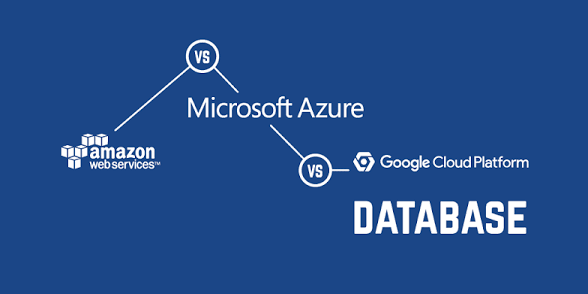
As businesses increasingly rely on data-driven decision-making, choosing the right cloud database service has become a strategic priority. Leading cloud providers like Amazon Web Services, Microsoft Azure, and Google Cloud Platform offer robust database solutions designed for scalability, reliability, and performance.
Each platform provides a wide range of database services, including relational, NoSQL, and fully managed solutions. Understanding their differences is essential for selecting the right fit for your application and workload.
What Are Cloud Database Services?
Cloud database services are managed database solutions hosted on cloud platforms. They eliminate the need for manual infrastructure management, allowing teams to focus on development and data optimisation.
Core benefits include:
- Automated backups and updates
- High availability and fault tolerance
- On-demand scalability
- Built-in security and compliance
AWS Database Services
Amazon Web Services offers one of the most comprehensive database portfolios in the cloud industry.
Key Services
- Amazon RDS (Relational Database Service): Managed relational databases supporting MySQL, PostgreSQL, and more
- Amazon DynamoDB: Fully managed NoSQL database with low latency
- Amazon Aurora: High-performance relational database compatible with MySQL and PostgreSQL
- Amazon Redshift: Data warehousing solution for analytics
Strengths
- Broadest range of database options
- Strong global infrastructure
- High scalability and reliability
- Mature ecosystem and integrations
Best For
Organizations needing a wide variety of database solutions and global scalability.
Azure Database Services
Microsoft Azure provides enterprise-grade database solutions with deep integration into Microsoft products.
Key Services
- Azure SQL Database: Fully managed relational database service
- Azure Cosmos DB: Globally distributed NoSQL database
- Azure Database for PostgreSQL/MySQL: Managed open-source databases
- Azure Synapse Analytics: Integrated analytics service
Strengths
- Seamless integration with the Microsoft ecosystem
- Strong hybrid cloud capabilities
- Enterprise-level security and compliance
- Multi-model database support
Best For
Enterprises are already using Microsoft technologies and hybrid cloud environments.
Google Cloud Database Services
Google Cloud Platform is known for its innovation in data analytics and high-performance databases.
Key Services
- Cloud SQL: Managed relational database service
- Cloud Firestore: NoSQL document database
- Bigtable: High-performance NoSQL database for large-scale workloads
- BigQuery: Serverless data warehouse for analytics
Strengths
- Excellent performance for analytics workloads
- Strong support for real-time data processing
- Fully managed and serverless options
- Advanced AI and machine learning integration
Best For
Data-intensive applications, analytics, and real-time processing use cases.
AWS vs Azure vs GCP: Key Comparison
1. Database Variety
- AWS offers the widest range of database services
- Azure provides balanced options with an enterprise focus
- GCP specialises in analytics and high-performance databases
2. Performance and Scalability
- AWS: Proven scalability across global infrastructure
- Azure: Strong hybrid and enterprise scalability
- GCP: High performance in big data and analytics workloads
3. Ease of Use
- AWS: Powerful but can be complex for beginners
- Azure: User-friendly for Microsoft users
- GCP: Clean interface and developer-friendly tools
4. Pricing
- AWS: Pay-as-you-go with flexible pricing models
- Azure: Competitive pricing with enterprise agreements
- GCP: Often cost-effective for analytics and storage
5. Integration Capabilities
- AWS: Extensive third-party integrations
- Azure: Best integration with Microsoft tools like Office and Windows Server
- GCP: Strong integration with data analytics and AI services
How to Choose the Right Cloud Database Service
When selecting a cloud database platform, consider the following:
- Workload type: Relational, NoSQL, or analytics
- Scalability needs: Expected growth and traffic
- Ecosystem compatibility: Existing tools and platforms
- Budget constraints: Pricing models and cost optimisation
- Performance requirements: Latency, throughput, and availability