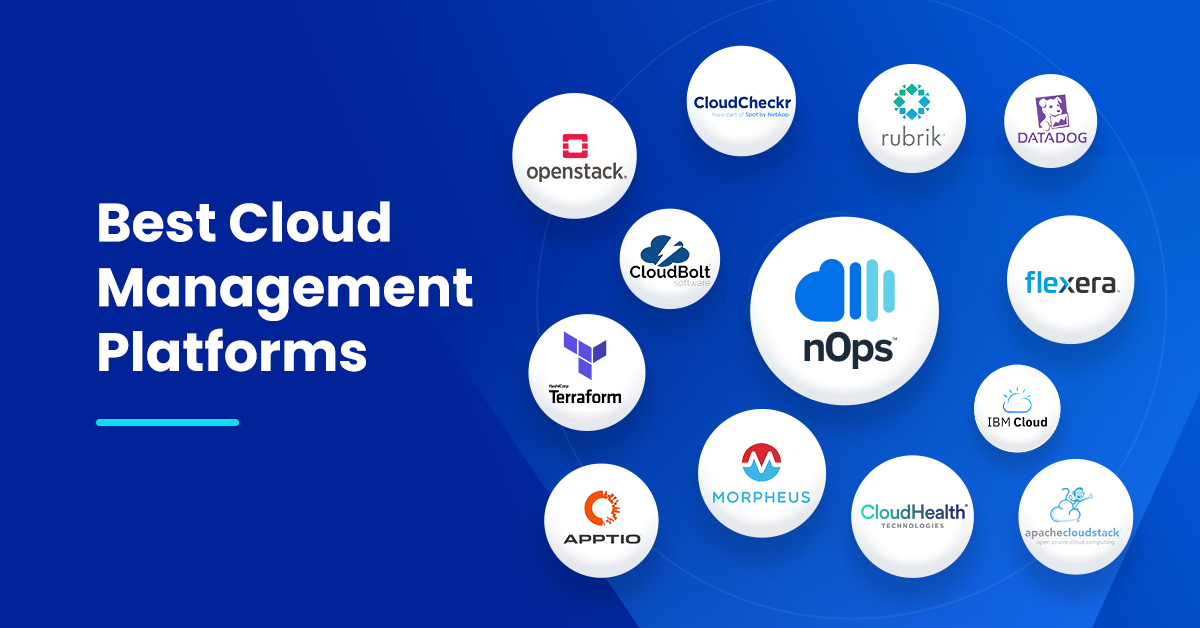
As organizations adopt multi-cloud strategies, managing resources across platforms like Amazon Web Services, Microsoft Azure, and Google Cloud Platform becomes increasingly complex. Multi-cloud management platforms (CMPs) provide a unified interface to monitor, optimize, and govern cloud environments.
These tools enable enterprises to reduce operational complexity, improve cost efficiency, and maintain consistent security policies across multiple cloud providers.
What Are Multi-Cloud Management Platforms?
Multi-cloud management platforms are tools designed to manage workloads, infrastructure, and services across multiple cloud providers from a single interface.
Core capabilities include:
- Unified visibility across cloud environments
- Cost optimization and FinOps management
- Policy-based governance and compliance
- Automation and orchestration
- Performance monitoring and analytics
These platforms are essential for enterprises operating hybrid or multi-cloud architectures.
Top Cloud Management Platforms for Multi-Cloud Environments
1. VMware Aria (vRealize Suite)
VMware Aria is a leading enterprise-grade platform offering unified cloud management across public and private environments.
Key features:
- Centralized dashboard for multi-cloud visibility
- Advanced automation and orchestration
- Policy-based governance
- Deep integration with the VMware ecosystem
Best for: Enterprises with hybrid cloud and VMware infrastructure.
2. CloudHealth by VMware
VMware CloudHealth is widely used for cost optimization and governance in multi-cloud environments.
Key features:
- Cloud cost management and optimization
- Resource utilization insights
- Governance and compliance controls
- Multi-cloud visibility
Best for: Organisations focused on FinOps and cost control.
3. Microsoft Azure Arc
Azure Arc extends Azure management capabilities to any infrastructure, including other cloud providers.
Key features:
- Unified management across on-prem and cloud
- Centralized policy enforcement
- Integration with Azure services
- Hybrid and multi-cloud support
Best for: Enterprises invested in the Microsoft ecosystem.
4. IBM Cloud Pak for Multicloud Management
IBM Cloud Pak for Multicloud Management provides AI-powered automation and governance for complex environments.
Key features:
- Application and workload management
- AI-driven automation
- Strong compliance and security features
- Kubernetes-based orchestration
Best for: Large enterprises with strict compliance requirements.
5. CloudBolt
CloudBolt is a powerful CMP focusing on governance, automation, and cost management.
Key features:
- Self-service provisioning
- Policy-based governance
- Cost tracking and optimization
- Integration with major cloud providers
Best for: Enterprises needing governance and cost control.
6. Morpheus
Morpheus offers strong orchestration and automation capabilities across multiple clouds.
Key features:
- Multi-cloud orchestration
- Application provisioning and automation
- Integration with DevOps tools
- Hybrid cloud support
Best for: DevOps teams managing complex deployments.
7. Nutanix Cloud Manager
Nutanix Cloud Manager provides unified management across on-premises and cloud environments.
Key features:
- Hybrid cloud management
- Cost governance and automation
- Role-based access control
- Simplified operations
Best for: Enterprises with hybrid cloud strategies.
8. Scalr
Scalr is a lightweight platform focused on policy enforcement and automation.
Key features:
- Infrastructure automation
- Policy-based governance
- Cost optimization
- Developer-friendly interface
Best for: Small to mid-sized teams and developers.
Key Benefits of Multi-Cloud Management Platforms
1. Unified Visibility
Manage all cloud resources from a single dashboard, reducing complexity.
2. Cost Optimization
Track usage and optimize spending across multiple cloud providers.
3. Enhanced Governance and Security
Enforce consistent policies and compliance across environments.
4. Automation and Efficiency
Automate provisioning, scaling, and management tasks.
5. Improved Performance Monitoring
Gain insights into application and infrastructure performance in real time.
How to Choose the Right Platform
When selecting a multi-cloud management platform, consider:
- Cloud compatibility: Support for AWS, Azure, GCP, and hybrid setups
- Automation capabilities: Infrastructure provisioning and orchestration
- Cost management: FinOps tools and budgeting features
- Security and compliance: Policy enforcement and audit capabilities
- Ease of integration: Compatibility with DevOps tools and workflows