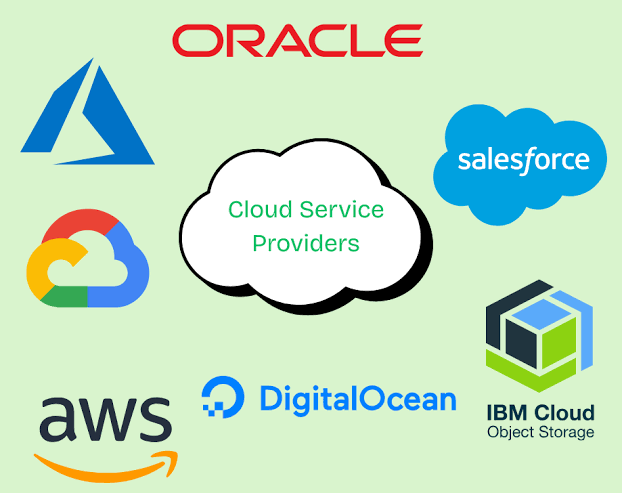
As enterprises accelerate digital transformation, managing complex cloud environments has become increasingly challenging. Managed cloud service providers (MCSPs) help organizations offload infrastructure management, security, monitoring, and optimization to experts, allowing teams to focus on innovation and business growth.
Leading providers like Amazon Web Services, Microsoft Azure, and Google Cloud Platform dominate the market, while specialized providers offer tailored enterprise solutions.
What Are Managed Cloud Service Providers?
Managed cloud service providers are third-party companies that manage cloud infrastructure and services on behalf of businesses. They handle tasks such as deployment, monitoring, security, compliance, and optimization.
Key capabilities include:
- Infrastructure management and automation
- 24/7 monitoring and support
- Security and compliance management
- Cost optimization and performance tuning
These services are particularly valuable for enterprises operating in multi-cloud or hybrid environments.
Top Managed Cloud Service Providers for Enterprises
1. Amazon Web Services (AWS)
Amazon Web Services is the global leader in cloud computing, offering a vast range of managed services for compute, storage, databases, and AI.
Key strengths:
- Extensive global infrastructure
- Wide service portfolio
- Advanced automation and monitoring tools
- Strong partner ecosystem
Best for: Enterprises requiring scalability and a comprehensive cloud ecosystem.
2. Microsoft Azure
Microsoft Azure is a top choice for enterprises leveraging Microsoft technologies and hybrid cloud environments.
Key strengths:
- Seamless integration with Microsoft products
- Strong hybrid cloud capabilities
- Enterprise-grade security and compliance
- Flexible deployment models
Best for: Organizations using Windows Server, Office, and enterprise Microsoft solutions.
3. Google Cloud Platform (GCP)
Google Cloud Platform excels in data analytics, AI, and high-performance computing.
Key strengths:
- Advanced data analytics and machine learning
- High-performance infrastructure
- Kubernetes-native architecture
- Cost-effective for data workloads
Best for: Data-driven enterprises and analytics-heavy applications.
4. IBM Cloud
IBM Cloud is known for enterprise-focused solutions, especially in regulated industries.
Key strengths:
- Strong AI capabilities with Watson
- Industry-specific cloud solutions
- High security and compliance standards
- Hybrid cloud expertise
Best for: Enterprises in finance, healthcare, and government sectors.
5. Oracle Cloud
Oracle Cloud specializes in database management and enterprise applications.
Key strengths:
- High-performance database services
- Strong support for enterprise workloads
- Integrated business applications
- Cost-effective infrastructure
Best for: Enterprises with heavy database and ERP workloads.
6. VMware Cloud
VMware provides powerful hybrid and multi-cloud solutions built on virtualization technology.
Key strengths:
- Seamless integration with on-premises infrastructure
- Strong virtualization capabilities
- Hybrid cloud flexibility
- Enterprise-grade performance
Best for: Organizations transitioning from traditional data centers to cloud.
7. Nutanix Cloud Platform
Nutanix offers a hybrid multi-cloud platform designed for enterprise workloads.
Key strengths:
- Hyperconverged infrastructure (HCI)
- Multi-cloud management
- Built-in automation and security
- Simplified operations
Best for: Enterprises seeking hybrid cloud and private cloud solutions.
8. Rackspace Technology
Rackspace Technology is a well-known managed cloud provider offering multi-cloud expertise.
Key strengths:
- Multi-cloud management (AWS, Azure, GCP)
- 24/7 expert support
- Managed security and compliance
- Strong consulting services
Best for: Enterprises needing fully managed multi-cloud support.
Key Benefits of Managed Cloud Services
1. Reduced Operational Complexity
Enterprises can offload infrastructure management to experts.
2. Enhanced Security and Compliance
Providers offer advanced security controls and regulatory compliance support.
3. Cost Optimization
Managed services help optimize cloud spending and resource utilization.
4. Scalability and Flexibility
Easily scale resources based on business needs.
5. 24/7 Monitoring and Support
Continuous monitoring ensures high availability and minimal downtime.
How to Choose the Right Managed Cloud Provider
When selecting a managed cloud service provider, consider:
- Cloud strategy: Single cloud, multi-cloud, or hybrid
- Industry requirements: Compliance and regulatory needs
- Service offerings: Depth of managed services
- Support level: Availability of 24/7 expert support
- Cost structure: Pricing models and optimization tools