Cloud computing has transformed how organizations store data, run applications, and manage IT resources. Behind every cloud service lies a well-structured system known as cloud computing architecture.
Cloud architecture defines how different components, such as servers, storage, networking, and software, work together to deliver services over the internet. Understanding this architecture helps businesses and developers better utilize cloud platforms.
What is Cloud Computing Architecture?
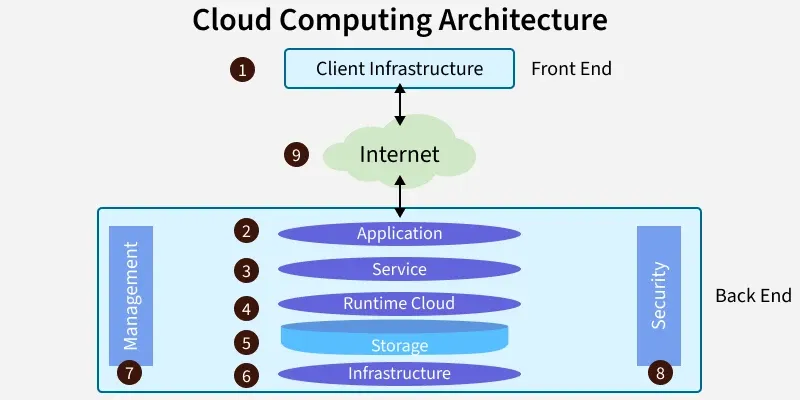
Cloud computing architecture refers to the overall structure and design of cloud systems that allow users to access computing services remotely.
It consists of two main parts:
- Front-End (Client Side)
- Back-End (Cloud Infrastructure)
These parts communicate through the internet to deliver applications, storage, and computing power to users.
Main Components of Cloud Computing Architecture
Cloud architecture includes several important components that work together to deliver efficient cloud services.
1. Front-End Platform
The front-end is the client side of the cloud computing system. It is the interface through which users interact with cloud services.
Examples of Front-End Interfaces
- Web browsers
- Mobile applications
- Desktop applications
Users access services like Google Drive, Dropbox, or Microsoft 365 through these interfaces.
2. Back-End Infrastructure
The back end is the core part of the cloud architecture managed by cloud providers. It includes all the physical and virtual resources required to run cloud services.
Back-End Includes
- Servers
- Data storage systems
- Databases
- Networking equipment
- Virtual machines
Major cloud providers like Amazon Web Services, Microsoft Azure, and Google Cloud manage these infrastructures.
3. Virtualization
Virtualization is one of the most important technologies in cloud computing architecture.
It allows multiple virtual machines to run on a single physical server. This improves resource utilization and enables efficient workload distribution.
Benefits of Virtualization
- Better resource management
- Improved scalability
- Reduced hardware costs
- Efficient server utilization
4. Cloud Storage
Cloud storage enables organizations and individuals to store and retrieve data from remote servers through the internet.
Advantages of Cloud Storage
- Data accessibility from anywhere
- Automatic backups
- High data reliability
- Large storage capacity
Examples of cloud storage services include Google Drive and Dropbox.
5. Network and Internet Connectivity
The network connects users to cloud infrastructure. Without reliable internet connectivity, cloud services cannot be accessed.
High-speed networks ensure:
- Fast data transfer
- Low latency
- Reliable cloud service delivery
6. Cloud Service Layer
The cloud service layer provides the actual services delivered to users. These services are generally categorized into three models:
- Infrastructure as a Service (IaaS) – Provides virtual servers and storage.
- Platform as a Service (PaaS) – Offers development platforms for building applications.
- Software as a Service (SaaS) – Delivers ready-to-use software over the internet.
Benefits of Cloud Computing Architecture
A well-designed cloud architecture provides several advantages:
Scalability
Resources can be expanded or reduced based on demand.
Cost Efficiency
Businesses avoid heavy investments in hardware and data centers.
High Availability
Cloud providers ensure continuous service with backup systems.
Flexibility
Organizations can deploy applications quickly and efficiently.