In cloud computing, terms like scalability and elasticity are often used interchangeably, but they represent different concepts. Understanding these differences is essential for designing efficient, cost-effective, and high-performing systems.
This guide explains cloud scalability vs elasticity, their benefits, and when to use each in real-world scenarios.
What Is Cloud Scalability?
Cloud scalability refers to the ability of a system to handle increased workload by adding resources (such as CPU, memory, or storage).
Scalability can be achieved in two main ways:
- Vertical Scaling (Scale Up): Increasing the capacity of a single server
- Horizontal Scaling (Scale Out): Adding more servers to distribute the load
Scalability is typically planned and ensures that systems can grow with business needs.
What Is Cloud Elasticity?
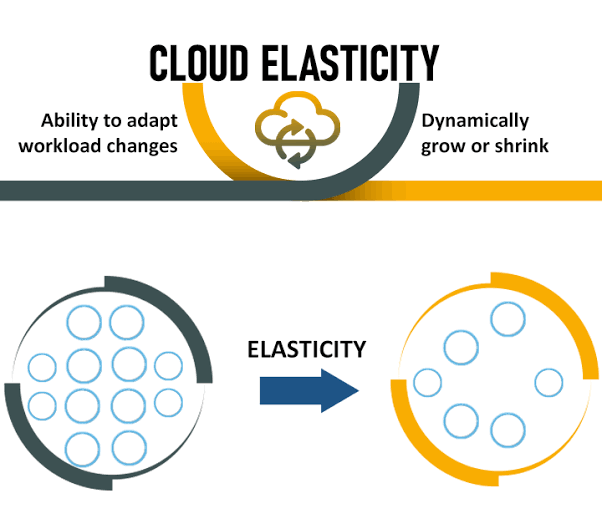
Cloud elasticity refers to the ability of a system to automatically adjust resources in real-time based on demand.
Resources are dynamically added or removed depending on workload fluctuations, ensuring optimal performance without over-provisioning.
Elasticity is more dynamic and responsive compared to scalability.
Key Differences Between Scalability and Elasticity
1. Definition
- Scalability: Ability to increase capacity to handle growth
- Elasticity: Ability to automatically adjust resources based on demand
2. Resource Adjustment
- Scalability: Manual or planned
- Elasticity: Automatic and real-time
3. Workload Type
- Scalability: Predictable and steady growth
- Elasticity: Unpredictable and fluctuating workloads
4. Cost Efficiency
- Scalability: May lead to unused resources if overestimated
- Elasticity: Optimizes cost by using only required resources
5. Use Case
- Scalability: Long-term business expansion
- Elasticity: Short-term traffic spikes or seasonal demand
Benefits of Cloud Scalability
1. Supports Business Growth
Easily expand infrastructure as your business grows.
2. Improved Performance
Ensures systems can handle increased workloads efficiently.
3. Long-Term Planning
Helps organizations prepare for future demands.
Benefits of Cloud Elasticity
1. Cost Optimization
Pay only for resources you actually use.
2. Real-Time Adaptation
Automatically responds to workload changes.
3. Efficient Resource Utilization
Prevents over-provisioning and underutilization.
Use Cases of Scalability vs Elasticity
Scalability Use Cases
- Growing e-commerce platforms
- Enterprise applications with steady user growth
- Expanding databases and storage systems
Elasticity Use Cases
- Seasonal sales (e.g., festive or holiday traffic spikes)
- Streaming services with fluctuating users
- Real-time analytics and IoT applications
Scalability vs Elasticity: Which One Should You Choose?
The choice depends on your workload patterns:
- Choose scalability when you expect consistent growth over time
- Choose elasticity when dealing with unpredictable or variable demand
In most modern cloud architectures, businesses use both scalability and elasticity together to achieve maximum efficiency and flexibility.