Businesses transitioning to cloud environments must grasp how cloud security vs traditional cybersecurity diverges to avoid gaps in protection. Traditional approaches focus on static perimeters around data centers, while cloud security adapts to dynamic, shared infrastructures across providers like AWS and Azure. These shifts demand new mindsets, tools, and processes for comprehensive defense.
Core Differences in Approach
Traditional cybersecurity builds fortified perimeters with firewalls and intrusion detection around owned hardware, emphasizing hardware controls and manual patching. Cloud security operates under a shared responsibility model, where providers secure the underlying infrastructure, but customers manage data, applications, and access. This division requires organizations to prioritize identity management and configuration over physical security.
Scalability marks another divide, as traditional setups scale linearly with hardware purchases, often leading to overprovisioning. Cloud environments auto-scale resources dynamically, demanding security that embeds into APIs and workflows for real-time policy enforcement. Compliance in traditional systems relies on periodic audits, whereas cloud mandates continuous monitoring due to ephemeral workloads.
Threat Landscape Variations
Traditional cybersecurity combats insider threats and perimeter breaches in controlled networks with known endpoints. Cloud introduces risks like misconfigured buckets, API exploits, and multi-tenant escape vectors unique to shared platforms. Attackers target identity federation and serverless functions in cloud setups, exploiting rapid provisioning speeds absent in on-premises environments.
Visibility challenges intensify in cloud vs traditional cybersecurity, as logs scatter across regions and services without centralized collection. Traditional monitoring scans fixed assets, but cloud demands behavioral analytics across petabytes of telemetry from control and data planes. Ransomware adapts differently, encrypting vast auto-scaling fleets in the cloud rather than traditional finite servers.
Technology and Tooling Contrasts
Firewalls in traditional cybersecurity sit at network edges, inspecting north-south traffic primarily. Cloud security deploys distributed, micro-segmented policies for east-west flows between workloads, using native services like security groups. Endpoint detection evolves into workload protection platforms that scan containers and functions continuously, unlike agent-based tools on static machines.
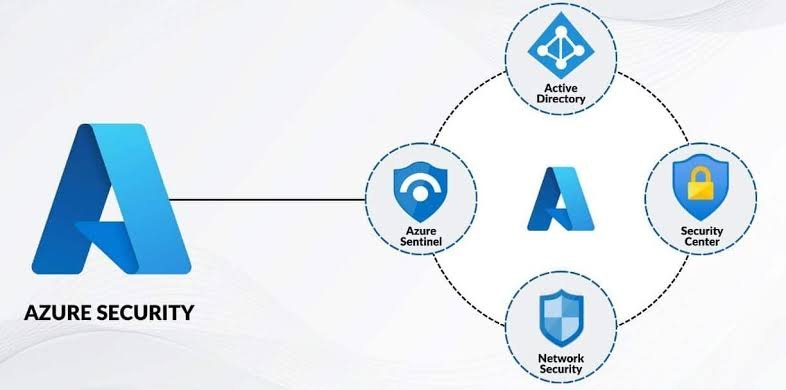
Identity management shifts from Active Directory in traditional setups to federated IAM with just-in-time access in the cloud. Automation via infrastructure as code replaces manual configs, enabling policy-as-code for drift detection. SIEM tools adapt for cloud by ingesting API events, contrasting traditional log focus on syslogs and packet captures.
Operational and Skill Shifts
Teams in traditional cybersecurity master hardware hardening and vendor patching cycles with siloed roles. Cloud security fosters DevSecOps integration, where developers embed controls in CI/CD pipelines for shift-left protection. Incident response accelerates in the cloud through automated quarantines, versus manual isolation in data centers.
Cost models differ starkly, with traditional cybersecurity incurring CapEx for appliances versus cloud's OpEx for usage-based security services. Skills evolve from network engineering to cloud-native certifications, emphasizing scripting and threat modeling for serverless architectures. Governance expands to track shadow IT and SaaS sprawl, absent in controlled traditional enterprises.
Best Practices for Hybrid Environments
Adopt zero trust as a unifying framework, verifying all access regardless of location in cloud security vs traditional cybersecurity debates. Centralize visibility with platforms aggregating on-premises and cloud signals for unified dashboards. Implement consistent encryption policies across both, ensuring data protection uniformity.
Automate compliance checks with tools scanning configurations in real-time for cloud and periodic scans traditionally. Train hybrid teams on shared responsibilities, simulating attacks spanning data centers and clouds. Measure success via metrics like mean time to detect across environments, bridging operational silos effectively.
Transition Strategies for Organizations
Assess current traditional cybersecurity posture against cloud benchmarks, prioritizing identity and configuration risks first. Migrate incrementally with hybrid tools supporting both paradigms, avoiding rip-and-replace overhauls. Foster cultural shifts through workshops on cloud-specific threats like supply chain compromises in managed services.
Establish governance frameworks mapping controls across traditional and cloud assets for audit readiness. Leverage cloud-native services initially for quick wins, then integrate with legacy systems via secure gateways. Regularly benchmark against frameworks like NIST or CIS to evolve defenses holistically.