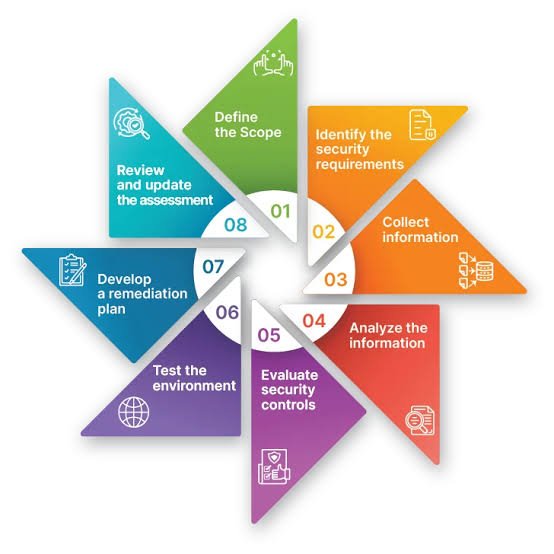
Organizations migrating to or operating in the cloud face escalating threats from misconfigurations, insider risks, and advanced attacks. A comprehensive cloud security checklist provides a structured roadmap to implement defense-in-depth, covering identity, data, networks, monitoring, and governance for multi-cloud resilience.
This checklist draws from industry standards like NIST, CIS Benchmarks, and shared responsibility models, helping teams systematically audit and fortify their environments. Regularly revisit it during migrations, audits, and incident reviews to stay ahead of evolving risks.
Identity and Access Management Checklist
Secure who accesses what with these foundational controls.
- Enforce multi-factor authentication (MFA) on all human and machine accounts, preferring phishing-resistant methods like FIDO2.
- Implement the principle of least privilege using RBAC or ABAC, with automated audits to revoke excess permissions quarterly.
- Enable just-in-time (JIT) access for elevated privileges, auto-expiring after defined windows.
- Federate IAM across providers (e.g., Okta with AWS IAM, Azure AD) to prevent sprawl in multi-cloud setups.
- Scan and deactivate orphaned service accounts or API keys monthly.
Data Protection Checklist
Shield sensitive data through encryption and classification.
- Classify data by sensitivity (e.g., PII, PCI) and apply automated labeling.
- Encrypt data at rest with customer-managed keys (CMKs) via KMS services, rotating every 90 days.
- Mandate TLS 1.3+ for all in-transit traffic, including internal VPC peering.
- Use data loss prevention (DLP) tools to monitor and block exfiltration patterns like bulk downloads.
- Implement tokenization/masking for non-production environments and immutable backups for ransomware defense.
Network Security Checklist
Limit attack spread with segmentation and visibility.
- Deploy micro-segmentation at the workload level using security groups and network ACLs.
- Configure cloud-native firewalls (e.g., AWS Network Firewall) with allow-lists for east-west traffic.
- Use private endpoints for databases and services to avoid public exposure.
- Enable intrusion detection/prevention systems (IDS/IPS) for real-time flow inspection.
- Secure hybrid connections with encrypted peering and VPNs.
Monitoring and Threat Detection Checklist
Maintain 24/7 visibility to catch threats early.
- Centralize logs from CloudTrail, Azure Monitor, etc., into a SIEM with UEBA for anomaly detection.
- Deploy CSPM tools to scan configurations daily for misconfigurations like open S3 buckets.
- Set up AI-driven alerts with risk scoring and automated remediation playbooks.
- Conduct regular penetration testing and red-team exercises quarterly.
- Monitor for shadow IT and SaaS usage via CASB solutions.
Compliance and Governance Checklist
Embed security into operations for scalability.
- Adopt IaC with policy-as-code (e.g., OPA) to enforce standards in CI/CD pipelines.
- Tag all resources by owner, environment, and compliance requirements for accountability.
- Align with frameworks like NIST CSF or CIS Benchmarks through automated reporting.
- Perform third-party risk assessments, demanding SOC 2 reports and SLAs.
- Maintain incident response playbooks tested via tabletop exercises biannually.
Workload and Application Security Checklist
Protect dynamic assets like containers and serverless.
- Scan container images and dependencies in CI/CD for vulnerabilities (SAST/DAST).
- Apply runtime protection for Kubernetes with network policies and eBPF monitoring.
- Harden serverless functions with least-privilege execution roles.
- Use immutable infrastructure to prevent runtime tampering.
- Shift-left security by integrating checks into developer workflows.
Human and Cultural Checklist
Address the weakest link in your team.
- Train staff annually on phishing, secure coding, and cloud-specific risks with simulations.
- Appoint security champions per team for ongoing advocacy.
- Track metrics like MTTD/MTTR to measure and improve posture.
- Partner with MSSPs for 24/7 SOC coverage if internal resources are limited.
- Foster a blame-free reporting culture for incidents.
Ongoing Maintenance Checklist
Security is continuously reviewed relentlessly.
- Run full audits monthly and after major changes.
- Update policies for new threats like quantum risks or AI exploits.
- Benchmark against peers using tools like Cloud Security Alliance CCM.
- Document everything for regulatory evidence (GDPR, HIPAA).
- Scale checklist to match organization growth, prioritizing high-impact items first.
This cloud security checklist equips organizations to build resilient environments. Start with high-risk areas like IAM and data protection, then expand systematically for comprehensive coverage that supports innovation without compromise.