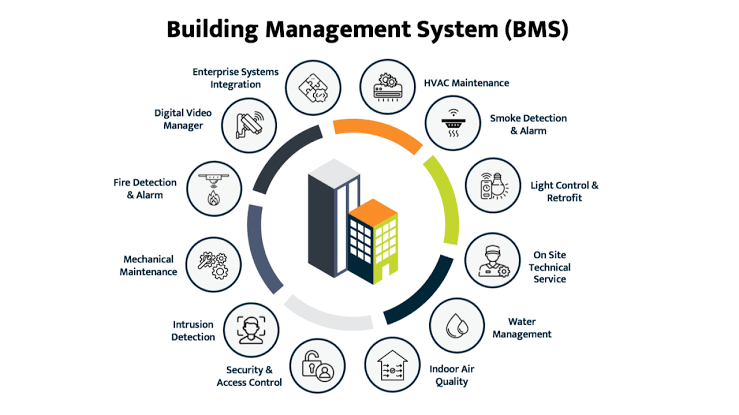
Modern buildings are becoming smarter, more energy efficient, and easier to manage thanks to Building Management Systems (BMS). These intelligent systems allow facility managers to monitor and control essential building functions such as lighting, heating, ventilation, air conditioning, and security from a centralized platform.
With rising energy costs and increasing demand for sustainable infrastructure, smart building automation has become a key part of modern construction and facility management. A well-designed BMS not only improves energy efficiency but also enhances occupant comfort and building safety.
In this guide, we’ll explore how Building Management Systems work, their key components, benefits, and why they are essential for modern smart buildings.
What Is a Building Management System (BMS)?
A Building Management System (BMS) is a centralized computer-based system used to monitor and control a building’s mechanical and electrical equipment.
A BMS typically manages systems such as:
- Heating, Ventilation, and Air Conditioning (HVAC)
- Lighting systems
- Power supply and energy monitoring
- Fire alarm systems
- Security and access control
- Elevators and other building equipment
The goal of a BMS is to optimize building performance, reduce energy consumption, and ensure smooth operation of all building services.
Key Components of a Building Management System
A typical BMS consists of several interconnected components that work together to automate building operations.
Sensors
Sensors collect real-time data from the building environment. They monitor parameters such as:
- Temperature
- Humidity
- Air quality
- Occupancy
- Lighting levels
These sensors provide critical information that helps the system make automated adjustments.
Controllers
Controllers act as the brain of the BMS. They process data received from sensors and make decisions based on programmed logic.
For example:
- Turning on the air conditioning when the temperature rises
- Adjusting lighting levels based on occupancy
- Activating ventilation when air quality drops
Controllers ensure systems respond automatically without manual intervention.
Actuators
Actuators execute commands issued by controllers. They physically adjust building systems, such as:
- Opening or closing dampers
- Adjusting valves
- Switching lights on or off
- Controlling motors or fans
Central Monitoring Software
The central software interface allows facility managers to monitor and control all building systems from a single dashboard.
Through this interface, operators can:
- View real-time data
- Set schedules for equipment
- Receive fault alerts
- Analyze energy consumption
- Adjust building parameters
This centralized control greatly simplifies facility management.
How Building Management Systems Work
A BMS operates through a continuous cycle of monitoring, processing, and control.
Step 1: Data Collection
Sensors installed throughout the building gather environmental and operational data such as temperature, occupancy, and energy usage.
Step 2: Data Processing
Controllers analyze the collected data and compare it with predefined settings or programmed algorithms.
Step 3: Automated Response
If adjustments are required, the controller sends signals to actuators to modify system operations, for example, adjusting HVAC settings or turning lights off in unoccupied areas.
Step 4: Monitoring and Alerts
Facility managers can monitor system performance in real time. If any fault or abnormal condition occurs, the system generates alerts for quick maintenance action.
Benefits of Building Management Systems
Implementing a BMS offers several advantages for building owners, facility managers, and occupants.
Improved Energy Efficiency
BMS helps reduce energy waste by automatically adjusting lighting, heating, and cooling based on occupancy and environmental conditions.
Lower Operational Costs
Optimized equipment performance reduces electricity consumption and maintenance costs over time.
Enhanced Comfort
Maintaining proper temperature, humidity, and lighting levels creates a comfortable environment for building occupants.
Better Equipment Lifespan
Continuous monitoring helps detect faults early, preventing equipment damage and extending system life.
Centralized Control
Facility managers can monitor and manage multiple building systems from a single interface, improving operational efficiency.
Applications of Building Management Systems
BMS technology is widely used in different types of buildings, including:
- Commercial office buildings
- Hospitals and healthcare facilities
- Airports and transportation hubs
- Universities and educational campuses
- Hotels and shopping malls
- Industrial facilities
In large facilities, BMS is essential for managing complex infrastructure efficiently.
Future of Building Management Systems
As technology evolves, Building Management Systems are becoming more intelligent and integrated with smart technologies.
Future developments include:
- AI-based building automation
- Internet of Things (IoT) integration
- Predictive maintenance systems
- Advanced energy analytics
- Smart city infrastructure integration
These innovations will make buildings even more efficient, sustainable, and easier to manage.