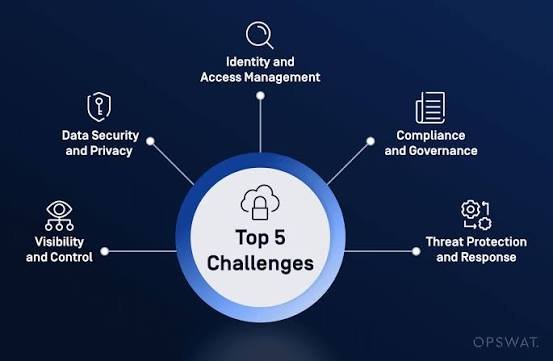
In today's digital landscape, enterprises rely heavily on cloud infrastructure to drive scalability, innovation, and efficiency. However, this shift introduces complex security challenges, as misconfigurations, insider threats, and sophisticated cyberattacks can expose sensitive data and disrupt operations. Securing cloud infrastructure demands a proactive, layered approach that combines technology, processes, and people, often referred to as defense-in-depth, to minimize risks while maintaining business agility.
Enterprises must start by understanding their unique attack surface, which spans multi-cloud environments, hybrid setups, and thousands of workloads. Traditional perimeter-based security fails here, as cloud resources are dynamic and distributed. Instead, adopting zero-trust principles ensures continuous verification of every access request, regardless of location or user. This mindset shift is crucial because breaches like the 2023 Capital One incident, caused by a simple IAM misconfiguration, highlight how even large organizations remain vulnerable without rigorous controls.
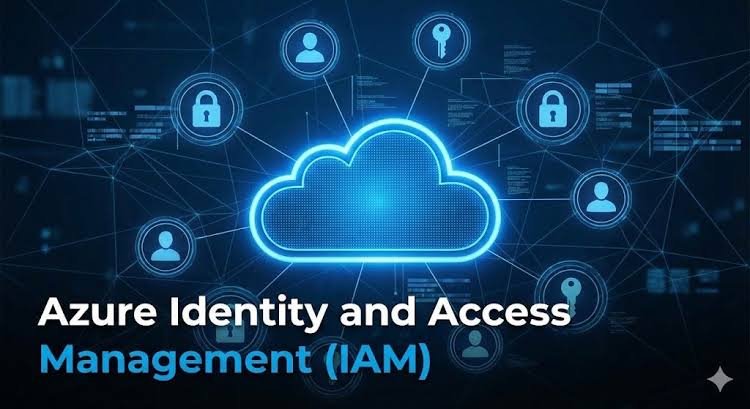
Implement Strong Identity and Access Management (IAM)
Identity and access management form the cornerstone of securing cloud infrastructure, controlling who can access what and under which conditions. Enterprises should enforce multi-factor authentication (MFA) across all accounts, preferring phishing-resistant hardware keys like FIDO2 over SMS-based options, as they resist common credential-stuffing attacks. Role-based access control (RBAC) or attribute-based access control (ABAC) ensures least privilege, where users and services receive only the permissions needed for their tasks, automatically revoking excess rights through regular audits.
Beyond basics, just-in-time (JIT) access for elevated privileges reduces standing risks; for instance, developers might get temporary admin rights for a deployment window, then lose them automatically. Centralized IAM tools with single sign-on (SSO) across providers like AWS IAM, Azure AD, or Google Cloud IAM prevent sprawl in multi-cloud setups. Regularly scanning for orphaned accounts or over-privileged service principals catches drifts that attackers exploit, maintaining a tight security posture.
Encrypt Data Everywhere
Encryption protects data at rest, in transit, and in use, rendering it useless to unauthorized parties even if stolen. For enterprises, this means enabling server-side encryption with customer-managed keys (CMKs) on services like Amazon S3 or Azure Blob Storage, ensuring you control key rotation and access via dedicated key management services (KMS). TLS 1.3 or higher must secure all traffic, including internal VPC flows, with mutual TLS (mTLS) for machine-to-machine communications to prevent man-in-the-middle attacks.
Key management is non-negotiable: automate rotation, enforce short lifecycles, and integrate with hardware security modules (HSMs) for compliance-heavy industries like finance or healthcare. Data classification policies help prioritize critical assets to get end-to-end encryption, while tools monitor for weak ciphers or unencrypted exposures. This holistic encryption strategy not only safeguards intellectual property but also meets regulations like GDPR or HIPAA.
Segment Networks and Enforce Micro-Segmentation
Network segmentation limits lateral movement, confining breaches to isolated zones. In cloud environments, use native tools like AWS VPCs, Azure Virtual Networks, or Google VPCs to create granular subnets, blocking unnecessary inter-zone traffic with security groups and network ACLs acting as firewalls. Micro-segmentation takes it further by applying policies at the workload level, inspecting east-west traffic between containers or VMs vital for Kubernetes-heavy enterprises.
For hybrid/multi-cloud, cloud-native firewalls (e.g., AWS Network Firewall or Azure Firewall) provide consistent rules across providers, preventing configuration drift. Define allow-lists over deny-lists for precision, and integrate with intrusion detection systems (IDS) to flag anomalies like unexpected data exfiltration. This approach proved effective in thwarting ransomware spread during recent enterprise incidents.
Adopt Continuous Monitoring and Threat Detection
Visibility is power in securing cloud infrastructure; blind spots invite disaster. Deploy Cloud Security Posture Management (CSPM) tools like Prisma Cloud or Aqua Security to scan configurations continuously for misconfigurations, such as public S3 buckets or overly permissive APIs. Combine with Cloud Workload Protection Platforms (CWPP) for runtime protection, using behavioral analytics and AI to detect anomalies like unusual API calls or privilege escalations in real-time.
Centralize logs via SIEM systems (e.g., Splunk or ELK Stack) fed from CloudTrail, Azure Monitor, or Cloud Audit Logs, enabling correlation across environments. Set up automated alerts with risk scoring to prioritize high-impact issues, and integrate SOAR for remediation playbooks, like auto-quarantining compromised instances. Regular penetration testing and red-team exercises validate defenses, ensuring they evolve with threats.
Automate Compliance and Governance
Manual processes scale poorly for enterprises; automation enforces consistency. Use Infrastructure-as-Code (IaC) tools like Terraform with policy-as-code (e.g., OPA or Sentinel) to bake security into deployments, rejecting non-compliant changes at commit time. Align with frameworks like NIST CSF, CIS Benchmarks, or CSA CCM through automated audits that flag drifts and trigger fixes.
Governance frameworks define ownership of resources by team/business unit for accountability and enforce data residency for global operations. Third-party audits and continuous compliance dashboards provide evidence for stakeholders, reducing breach fallout. In multi-cloud scenarios, vendor-agnostic tools ensure uniform policies, avoiding siloed risks.
Secure the Supply Chain and Third Parties
Enterprises rarely operate in isolation; vendor risks amplify threats. Vet cloud providers for SOC 2/ISO 27001 certifications and review their incident history before migration. For SaaS/IaaS dependencies, enforce contractual security clauses and monitor via shared responsibility models. Providers secure the cloud; you secure your usage.
Container and serverless security requires scanning images in registries (e.g., Twistlock) and runtime policies for functions. Shift-left security integrates DAST/SAST into CI/CD pipelines, catching vulnerabilities early. This end-to-end approach mitigates SolarWinds-style supply chain attacks.
Train Teams and Foster a Security Culture
Technology alone fails without skilled people. Conduct regular training on phishing recognition, secure coding, and cloud-specific risks, using simulations to build muscle memory. Appoint cloud security champions per team to embed best practices and run tabletop exercises for incident response.
Metrics like mean time to detect (MTTD) and remediate (MTTR) track maturity, driving continuous improvement. Partnering with managed security service providers (MSSPs) fills skill gaps for resource-strapped enterprises.
Securing cloud infrastructure is an ongoing journey, not a one-time project. By layering these practices, strong IAM, encryption, segmentation, monitoring, automation, supply chain vigilance, and culture, enterprises can confidently harness the cloud's power while thwarting threats. Start small, scale methodically, and measure relentlessly for resilient operations.