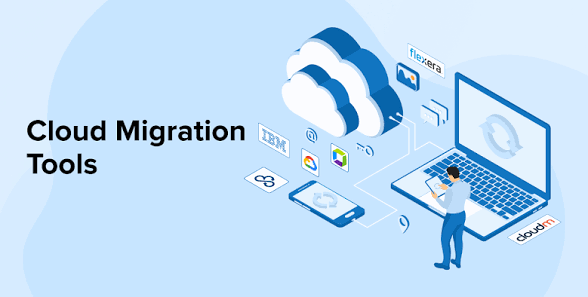
Cloud migration has evolved into a strategic IT initiative, not just a technical task. Enterprises today must move complex workloads, legacy systems, and massive datasets to the cloud while ensuring minimal downtime, cost control, and security compliance.
Modern cloud migration tools help organizations:
- Assess current infrastructure
- Plan migration strategies
- Execute data and application transfers
- Monitor performance post-migration
Let’s explore the best tools widely used in 2026.
1. Amazon Web Services – AWS Migration Hub & AWS Application Migration Service
AWS provides a comprehensive suite of migration tools designed for large-scale enterprise workloads.
Key Features:
- Centralized migration tracking with Migration Hub
- Continuous data replication for minimal downtime
- Supports lift-and-shift (rehosting) migrations
- Integration with the AWS ecosystem
Best For:
- Enterprises migrating to AWS
- Large-scale application migration
- Complex infrastructure environments
AWS tools enable automated and scalable migrations with minimal disruption.
2. Microsoft – Azure Migrate
Azure Migrate is a powerful, all-in-one platform for discovering, assessing, and migrating workloads.
Key Features:
- Agentless infrastructure discovery
- Cost estimation and TCO analysis
- Dependency mapping for applications
- End-to-end migration lifecycle management
Best For:
- Enterprises using the Microsoft ecosystem
- Hybrid cloud environments
- IT teams need detailed cost insights
It provides deep assessment and planning tools to reduce migration risks.
3. Google – Google Cloud Migration Center
Google’s migration platform focuses on data-driven decision-making and automation.
Key Features:
- Automated asset discovery
- Migration planning and cost estimation
- Performance optimization insights
- Integration with analytics and AI tools
Best For:
- Data-intensive businesses
- AI and analytics workloads
- Cloud-native organizations
Helps teams make informed migration decisions using real-time insights.
4. VMware – VMware HCX
VMware HCX is a leading tool for migrating virtual machines across cloud environments.
Key Features:
- Live migration (vMotion) with minimal downtime
- Network extension preserving IP addresses
- Bulk migration capabilities
- Hybrid cloud support
Best For:
- Enterprises using VMware infrastructure
- Data center to cloud migrations
- Large-scale VM migrations
Ideal for organizations transitioning from on-premise VMware environments.
5. OpenText – Carbonite Migrate
Carbonite Migrate is known for its cross-platform migration capabilities.
Key Features:
- Real-time data replication
- Minimal downtime migration
- Automated failover
- Supports physical, virtual, and cloud systems
Best For:
- Mixed IT environments
- Businesses needing high availability
- Cross-platform migrations
Ensures continuous operations during migration with minimal disruption.
6. IBM – Turbonomic
IBM Turbonomic focuses on optimizing workloads during and after migration.
Key Features:
- AI-driven workload optimization
- Resource allocation automation
- Performance monitoring
- Cost optimization
Best For:
- Enterprises focused on cost efficiency
- Post-migration optimization
- Hybrid cloud environments
Helps maintain performance while reducing cloud costs.
7. CloudFuze
CloudFuze is a multi-cloud migration platform designed for large-scale data transfers.
Key Features:
- Unlimited data migration capacity
- Multi-cloud support
- Built-in project management tools
- Dedicated migration support
Best For:
- Enterprises handling large datasets
- Multi-cloud strategies
- Complex migrations
Strong choice for organizations managing cross-cloud environments.
How to Choose the Right Cloud Migration Tool
Selecting the right tool depends on your infrastructure, business goals, and migration complexity.
For Enterprises:
- Choose tools like AWS Migration Hub, Azure Migrate, or VMware HCX
- Focus on scalability, automation, and compliance
For IT Teams:
- Look for tools with strong monitoring and automation features
- Prefer platforms offering real-time replication and minimal downtime
Key Decision Factors:
- Compatibility with your target cloud platform
- Migration speed and downtime tolerance
- Cost estimation and optimization features
- Support for hybrid or multi-cloud environments